

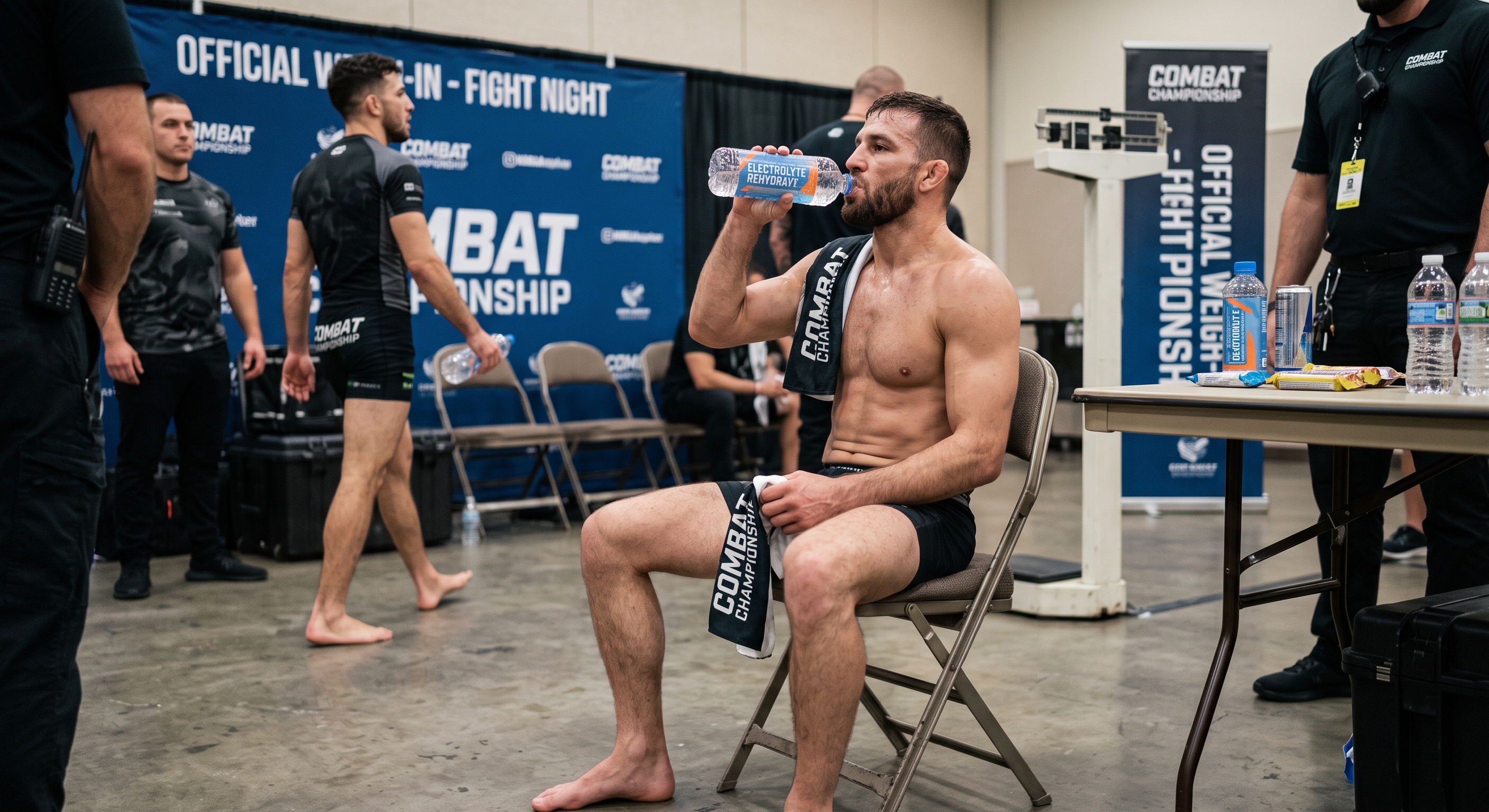
Rehydration After Weigh In: The Master Protocol for Fight Night Power
Rehydration After Weigh In: The Master Protocol for Fight Night Power
You have left the scale behind, but that is only half of it. The actual contest starts with your very first drink. There is no point in putting two gallons of tap water in a dehydrated stomach; it will not hasten recovery and will leave you with a drained gas tank and some cramping by fight night.
Effective rehydration is about timing and the right mix of sodium and glucose, not just volume. Do it right in the opening 24 hours and a fighter enters the cage with his reaction speed and muscle fullness intact. Make an error of it and the weighing in was the easy part of the week.
01. Why Plain Water Is a Biological Trap for Dehydrated Muscle
Sodium and Glucose: The Absorption Engine
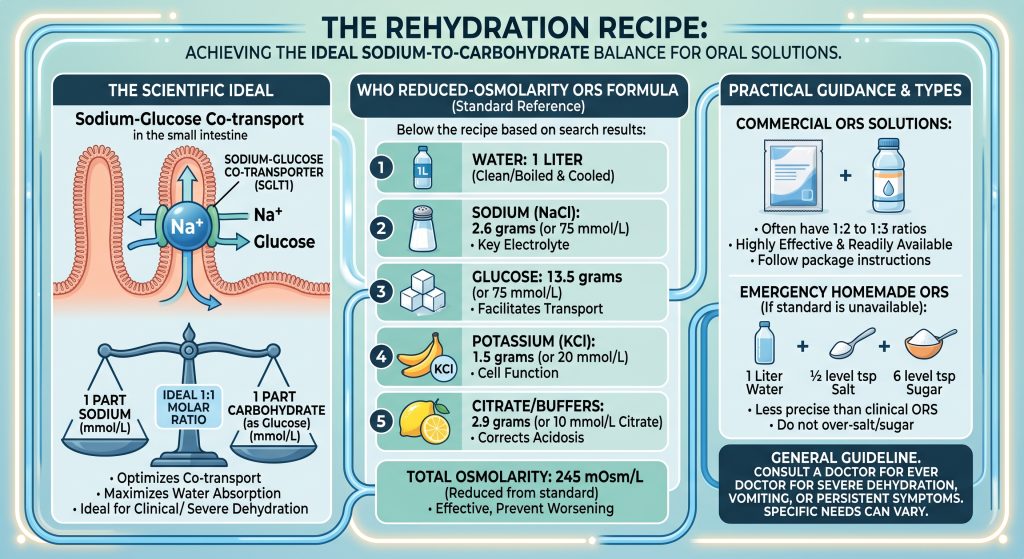
A dehydrated muscle cell will not take in water of its own accord. It requires sodium and glucose to act as the key for the cell wall via sodium-glucose cotransport, a mechanism where sodium hurls water molecules from the intestinal lining into the blood.
Amateur fighters often overlook this. Flooding a dry system with nothing but pure water can be counterproductive. It dilutes what little sodium is in the blood and can even precipitate hyponatremia, a hazardous fall in blood sodium levels that brings on the kind of nausea and confusion one might write off as being tired.
The physiology does not lie. Muscles hold onto water when they rebuild glycogen, taking in about three grams of water for every gram of glycogen. A beverage void of salt or carbohydrates will not set that in motion no matter how much is consumed.
FIGHTER TAKEAWAY: Your muscles stay flat if the post-weigh-in drink has no salt or carbs in it. Remember that for each gram of glycogen restored, the muscle wants three grams of water. Water is only going to follow the sodium.
02. The First 6 Hours: A Critical Window for Oral Rehydration
High Sodium, Carbs and Small Sips
There is a physical limit to how quickly the gut can put fluid in the bloodstream, in the neighborhood of 25 to 35 ounces per hour. Go beyond that and you are not rehydrating any faster; you are simply leaving fluid in the stomach to cause the bloat and sluggishness fighters complain of backstage.
Elite programs are now following the protocol set out in a 2025 position stand by the Journal of the International Society of Sports Nutrition. They use oral rehydration solutions running 1 to 1.5 liters an hour with 50 to 90 millimoles of sodium per deciliter and up to 60 grams of fast acting carbs. In the right hands this can outpace an IV drip without the health or legal exposure.
And the legal side of things is no abstraction. USADA puts a ban on IV infusions over 100 milliliters in a 12 hour span under the WADA Prohibited List, a rule that applies to anyone in the UFC Anti-Doping Program. USADA has made it clear that oral methods get you to the same place physiologically without the doping risk, so medical staffs for the major promotions have moved away from the old backstage IV bags.
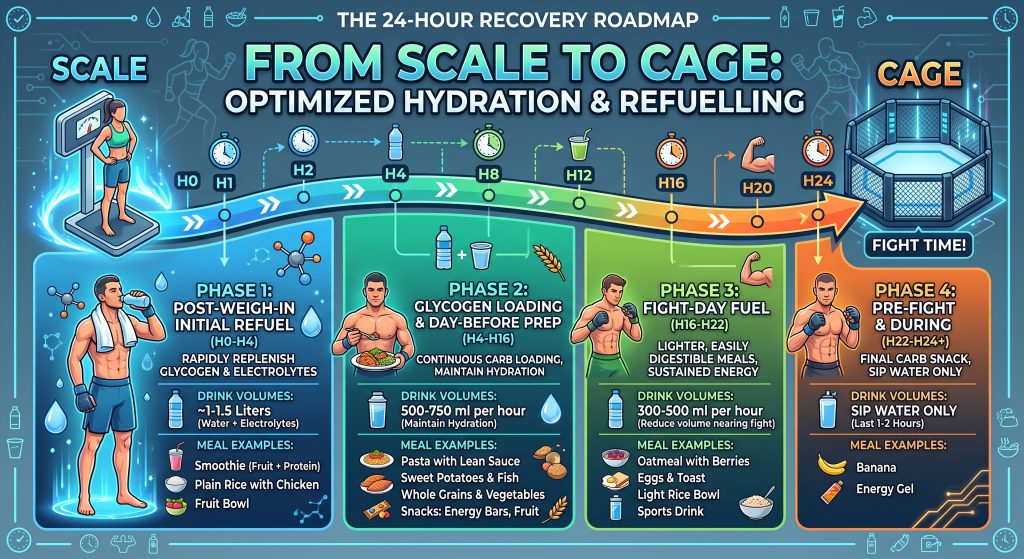
Here is how to structure the first six hours:
- First 30 minutes: Take small sips of a high sodium solution. Room temperature or warm is preferable to ice cold as the gut handles it better.
- Hour one: Keep sipping while introducing simple carbs to begin the process of glycogen resynthesis.
- Hours two to four: As the stomach settles and blood flow goes to digestion, move away from straight liquid electrolytes to some low fat, high carb food.
- Hours four to six: Maintain a steady intake of sodium and fluid, gauged by body weight.
WATCH OUT: The stomach has its limits. It can put to work only about a liter of fluid in an hour, or 33 ounces. Put more in and it will not rehydrate you any quicker; it will just sit there, making for a sluggish performance on fight night with all the bloating and nausea that entails.
03. Food Timing: Rebuilding Energy Without Compromising Digestion
Glycogen Replenishment Without the Bloat
There is a competition for blood flow between solid food and rehydration. For the first couple of hours after the scale, the body is busy drawing fluid back into the muscle tissue. If one were to put a heavy, high fat or fiber meal down too soon, blood is diverted from that task to handle digestion.
To refill the glycogen stores without that kind of digestive drag, fast acting starches are the way to go. White rice, sweet potatoes or oats will break down in no time. This is important for a fighter who has run a hard depletion protocol in the week leading up to the bout; they need to put in 8 to 12 grams of carbs per kilo of body weight to make up for what was taken off in the cut.
Patience is the price of admission here. A fighter might be tempted to have a large meal to feel full right away, but by the time he is walking out, his system will still be working through it. It is better to sequence liquids before solids, as the body’s allocation of blood flow will have it no other way.
04. Common Rehydration Mistakes That Ruin Fight Night Cardio
You will see fighters flat on their face on fight night because they made one of these missteps and didn’t think twice about it.
- Drinking cold too fast. A room temperature beverage is preferable since cold slows gastric emptying. Swallow a lot of it in a hurry and you get stomach spasms indistinguishable from the cramping one puts down to nerves.
- The post-weigh-in celebratory burger or pizza. It feels like you have earned it, but the fat will tie up your digestion for hours at the very moment you should be using that blood flow for absorption.
- The fear of water retention that leads some to shun sodium. Yet without salt, the fluid simply will not make it to the muscle tissue, so you are dehydrated no matter how much you have put in.
The Bottom Line
Getting on the scale is half the battle; proper rehydration is what secures the win. Make use of the 24 hours between the scale and the cage by respecting what the gut can handle and pairing every ounce of fluid with the necessary carbohydrate and sodium.
FAQ Section
What is the first thing to drink once off the scale?
An oral rehydration solution with simple glucose, potassium and sodium, ideally at room or warm temperature. Leave the plain water for later; dehydrated cells require sodium to take in fluid via osmotic transport.
How much weight is safe to put back on?
With a good protocol in place, most pros will see 8 to 15 percent of their body weight return in 24 to 30 hours. The number is a function of how hard they cut and which weight class they are in.
Why won’t the UFC allow IV bags?
USADA has put restrictions in place for the athlete’s own protection and to stop anyone from using an IV to cover up banned substances or to make a recovery from a water cut that would otherwise be unsafe.Is it okay to have a solid meal right after weighing in? No. The body needs that blood flow to reabsorb fluid, not to deal with a solid. Stick to small amounts of easily digested carbs and liquids for the first two hours.
- Sodium and glucose are what move fluid into the muscle cell; plain water alone will not do it for a depleted fighter.
- Do not try to outrun the gut’s ability to absorb 25 to 35 ounces an hour or you are just going to have fluid sitting in your stomach.
- The JISSN 2025 position stand is clear on the figures: 1 to 1.5 liters of sodium rich fluid per hour with fast acting carbs.
- Under the UFC Anti-Doping Program, USADA rules have made structured oral rehydration the norm following their ban on IV infusions.
- Wait at least two hours after the weigh in before having a heavy fat meal. Digestion and fluid absorption are vying for the same resources.

Author’s Note
Enjoyed this breakdown? Hit the subscribe button to get our latest documentary drops and fight camp analysis sent straight to your inbox before they go public.
Support Independent MediaAPEX STRIKE GEAR
Official Training & Equipment Partner of EOF. Elite gear for elite performance.
Explore Gear →