

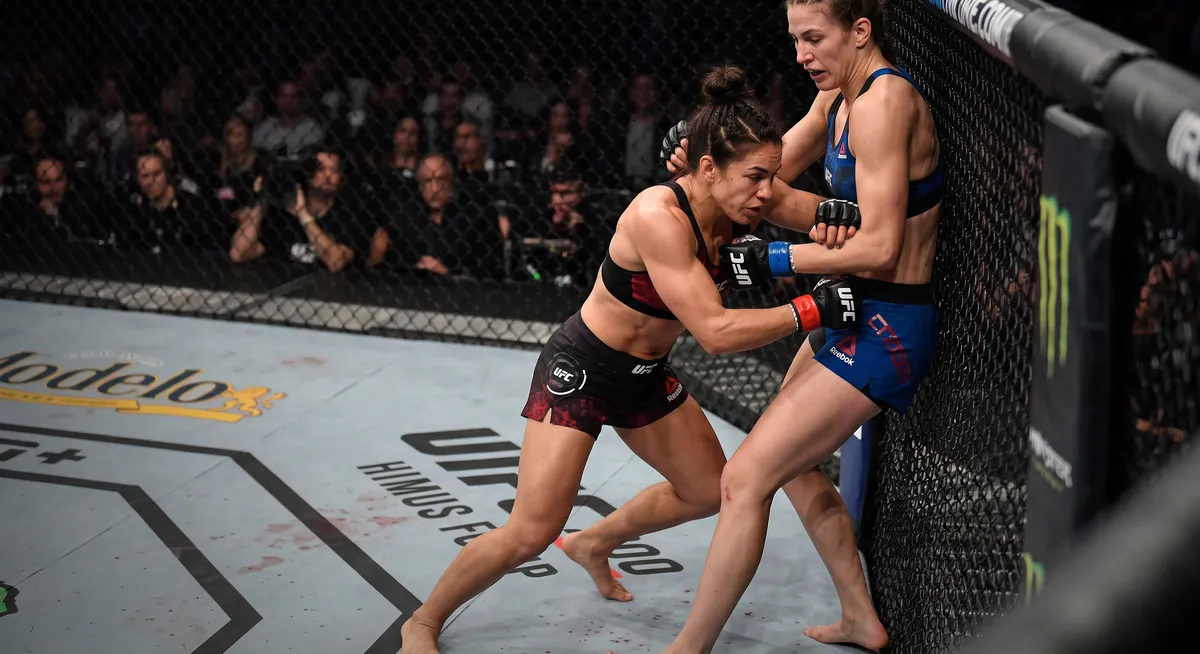
How to Close Distance and Put Away Taller Fighters in MMA
Striking Against Taller Opponents: How to Overcome Long Reach
It is a lesson every shorter fighter has to learn the hard way eventually: going straight at a taller opponent means going right into his best weapon. In MMA, bridging that gap against a longer frame is not a matter of courage or willingness to take a hit. It is a mechanical issue that demands a mechanical fix.
01. The Straight-Line Trap
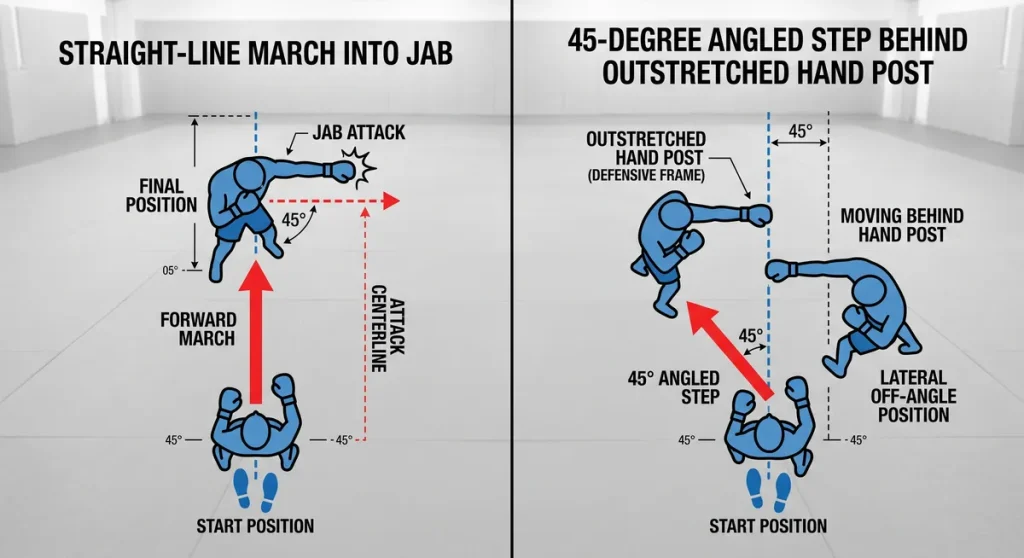
When a shorter fighter chases a taller striker in a straight line he is handing over the timing window the reach was made to exploit. A long jab finds its mark cleanly on a predictable path, and if you put forward momentum without an angle to break up the read, an intercepting front kick will be there to punish it.
The damage from those clean jabs and teeps adds up quickly. You are paying for the privilege of closing a few feet of ground before you have even put your own offense on the table, and what begins as a tactical shortcoming becomes physical wear and tear round after round. Then there is the psychological toll. After two rounds of being met with clean shots on every entry, a fighter will begin to hesitate, flinch or leave a shot incomplete. That makes the next attempt more perilous than the one before.
WATCH OUT: Do not make the mistake of ducking straight down at the waist to slip a jab. Bending from the spine leaves your head in place and open to an uppercut or knee. Bend from the knees and hips instead.
02. Hand Posting to Control the Lead
There is value in using a hand post to frame against an opponent’s guard or make physical contact with it. For the fraction of a second it takes to step in, it obstructs the taller fighter’s view and his ability to trigger the jab.
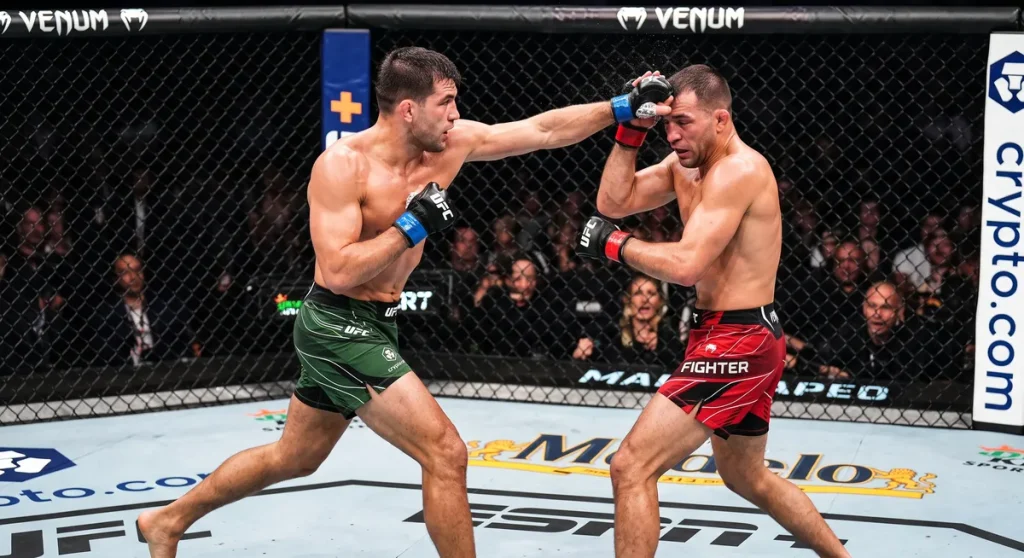
Put your lead arm out to touch the forehead or wrist of a taller opponent before you move your feet. You are doing two things: you cut off the line of sight the jab needs to be timed, and you have a point of reference for how much distance is left to cover rather than having to guess it.
FIGHTER TAKEAWAY: Make contact first. A quick post with the lead hand on the wrist or forehead will hold up the jab for half a second. That is enough time to cross the line with an overhand.
03. Level-Change Feints
Most upright strikers cannot let a dip of the hips pass them by because they would risk a takedown if it were genuine. Use that. When you feint a wrestling shot you force a reaction. If the taller fighter widens his base or drops his hands to ward off the threat, the chin is laid bare for a looping hook or overhand the moment the guard moves. A well-placed threat can do the heavy lifting before a punch has to come in clean.
Take Zhang Weili’s title bout with Jessica Andrade for an example of the wider principle at play, one that holds true even when there is not a straight reach mismatch. In the opening exchanges Zhang set up a straight right that left Andrade reeling, but she did not get there by trading in the pocket willy-nilly. She made use of inside leg kicks and footwork to break an aggressive opponent’s rhythm with feints and control the range, creating the kind of opening a fighter requires before putting power behind a shot.
04. The Inside Low Kick: Anchoring the Taller Fighter
The taller man will usually adopt a wide, bladed stance to make the most of his reach. But that very posture exposes the inside of the lead thigh to a low kick from an angle he cannot see. To put the kick down is not just about inflicting damage; it unbalances the leg the taller fighter would normally use to push off and circle back into his comfort zone. A shorter fighter should slip the head off center on the delivery instead of kicking from a static, squared position to avoid a counter.
Put a pocket combination on the end of that kick and the disruption is compounded. There is no time for a taller opponent to reset his distance after taking a low kick and being met with punches in the same beat. One has to be willing to commit though. A kick with any real intent takes a fraction of a second longer to pull back than a jab, so the shorter fighter must accept a measure of vulnerability for a strike that truly hampers the other man’s mobility as opposed to one that simply lands and separates.
FAQ Section
How does a shorter fighter close the gap without getting hit?
By entering at forty-five degree angles off the back of a feint or a hand post. A direct approach only gives a taller opponent an easy mark to time a straight jab or push kick.
What constitutes a hand post?
It is a matter of extending the lead or rear hand to frame against or briefly blind the opponent’s guard. It stops them from throwing straight while you step in.
Why is the inside low kick so good against a taller man?
They tend to stand wide to cover their reach. An inside low kick comes in from outside their field of vision to the lead leg, buckling their balance and stopping any retreat.
In what way do level-change feints set up power?
Dipping the hips to suggest a takedown is a split-second threat that makes an upright striker drop his hands or widen his base, leaving the chin open for an overhand or hook.
- To walk straight at a taller fighter is to offer up the timing window his reach was meant to exploit, and the physical toll will add up.
- Use a lead-hand post to block the jab and obscure vision for half a second and the entry is made safely.
- Level-change feints work because they force a reaction to a non-existent takedown, and the guard will be down when the hook arrives.
- The inside low kick is aimed at the lead thigh from an unseen angle to deny the taller man the ability to circle away.
- When chained into a combination in the pocket, it leaves him with no clean way to reset.

Author’s Note
Enjoyed this breakdown? Hit the subscribe button to get our latest documentary drops and fight camp analysis sent straight to your inbox before they go public.
Support Independent MediaAPEX STRIKE GEAR
Official Training & Equipment Partner of EOF. Elite gear for elite performance.
Explore Gear →