

The Cage Control Guide: MMA Wall Wrestling Tactics and Defense
MMA Wall Wrestling Tactics and Defense: The Complete Cage Control Guide
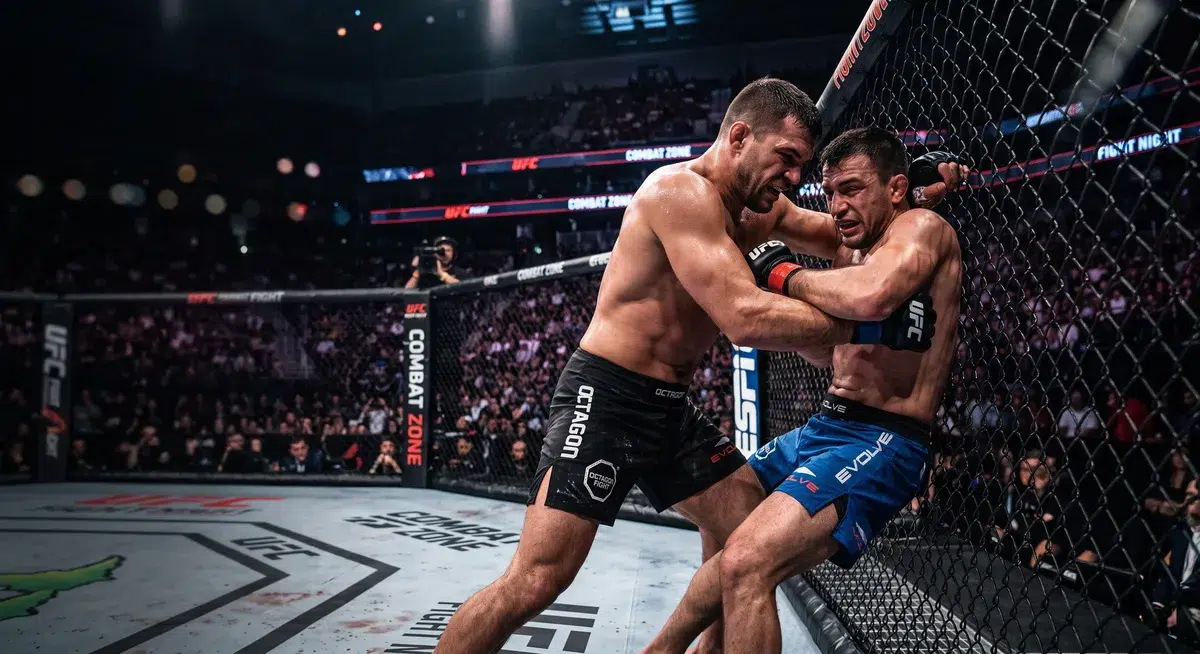
You will not find standard wrestling rules once a fight is pressed up against the black canvas of the fence. Open mat wrestling is all about explosive shots and speed, but the mesh changes hip angles and leaves no room to sprawl; in that environment, posture is what matters. The fence is a weapon in its own right and the one who knows how to wield it will determine where the action happens. This is not just freestyle wrestling on a smaller scale.
01. The Anchor Battle: Head Position and Underhooks
Winning the Centerline Against the Mesh
In a cage clinch the rule of the chin is paramount. Put your forehead directly under an opponent’s chin and you force their spine out of line. A spine that can not extend will not have the hip drive for a takedown. It is easy to miss on a casual broadcast, but this is an active mechanical override, not some passive way to sit back and let the fight come to a scramble.
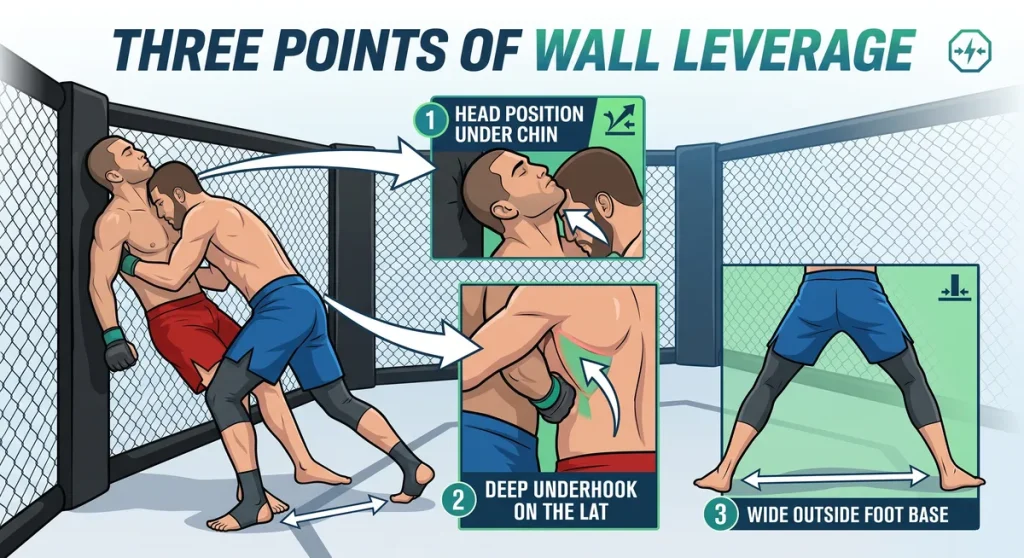
FIGHTER TAKEAWAY: Your opponent’s body has to go where your head does. Drive the forehead under the chin and you hyperextend their spine, robbing them of the power to put you down against the fence.
A deep underhook only makes things worse for them. Get it buried past the armpit and you have the rotational leverage to turn them into the fence instead of being turned yourself, setting a positional trap out of a tie-up. Most gyms do not make you feel the difference in practice, but a shallow underhook at the bicep will be stripped in one pummel exchange. To get the good one you have to be methodical, moving through overhooks and whizzers so you are not left with both hands locked in a failed attempt while the opponent circles.
02. Offensive Takedown Finishes on the Fence
Level Changes and Foot Traps
Do not expect a blast double leg to end things at the cage like it would in the middle of the mat. There is no ground to drive through for the lift. You need a different set of tools here: high crotch lifts or a single leg cutoff that uses the wall as a backstop.
There is a mechanical reason for the knee bump or stomp on the lead foot. It creates a half second of instability in the base of the defender. While he is trying to recover his footing he cannot resist a hip turn and you have your angle to finish the trip. Watch the posture, not the strength. If a defender tries to post up too soon you can see it and have a window to pull those hips back down before he gets his frame reestablished.
03. The Defensive Escape Blueprint: The Wall Walk
Using the Cage to Get Off the Mat
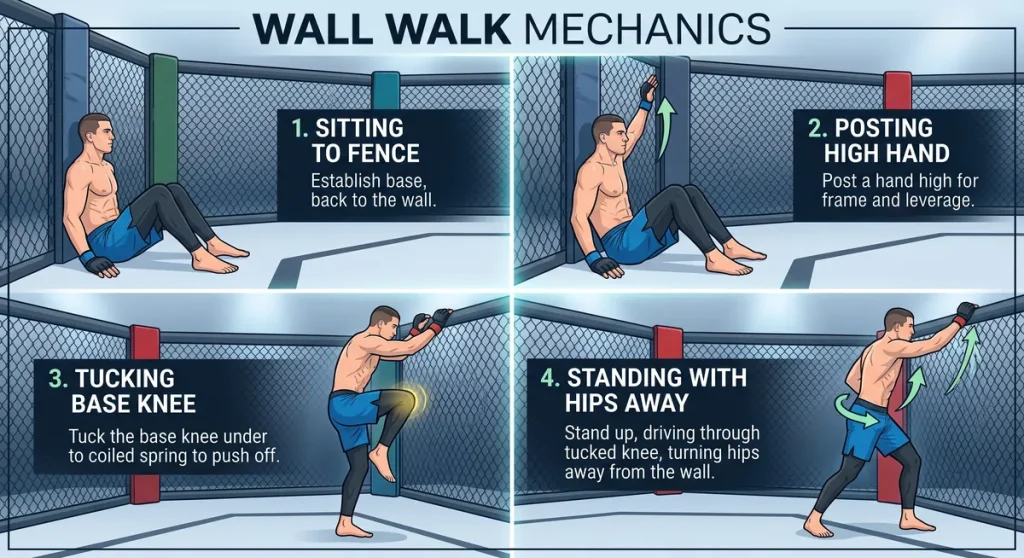
For a fighter on the bottom, the wall walk is a way to make use of the fence rather than fighting it. Instead of a conventional guard sweep, you put your back to the mesh and walk your feet in, building posture from the resistance of the wall in a manner open mat wrestling does not permit.
There is an order to it and you will be caught if you skip a step.
First, get your back to the fence in a way that does not leave the neck open to a guillotine; tuck the chin and post the far hand before you commit your shoulders. Then post the hands and walk the feet backward. You want to keep the base solid as the hips come up from the canvas, and that is best done with small, deliberate steps instead of one explosive lunge.
Build your frame and get the hips elevated. Put in a cross-face or collar tie on the man opposite you for the separation required to put the finish on him standing up; otherwise he will re-drive you down without much trouble. If one were to watch enough fight tape from the Octagon, the pattern is clear: the progression tends to fail at step two when a fighter makes the error of trying to stand in a single motion. He leaves his base too narrow and is easily put back on the mat.
04. Escaping the Clinch: Frame, Turn, and Exit
Breaking the Lock Without Wasting Your Grip
There is an instinct among strikers caught along the fence to just pull straight back into some open space once they are ready to disengage. It is a mistake. You square your hips right in the path of the opponent’s forward momentum and, at the very moment you think you have made your escape, you have given him an easy double leg.
WATCH OUT: With your back to the fence, do not push directly away from an opponent. A straight line back squares you off and is an invitation for a takedown. Make a forearm frame, pivot to the side and exit at an angle.
A bicep tie or forearm wedge is the answer here, sparing the grip strength a long tug of war would cost you. Wedge the forearm over the opponent’s bicep or collarbone for about six inches of room to slip the hips out of it. There is no need for a contest of arms where the fresher fighter has the advantage. Circle toward the weak side and put in a short strike to deny him a clean angle to reset his pressure.
The Bottom Line
It is leverage, posture and unrelenting positioning that sees a fighter dominate the cage wall, not brute force. The one who has won the head position and has the underhook is the one calling the shots. Good MMA wall wrestling treats the fence as an ally to control your exits, not a trap to be endured.
But there are limits to what fence control can do for you. Under the Unified Rules of MMA, judges look for effective striking and grappling first, aggressiveness second. Cage control is a tertiary matter at best. You might have had more success with this in the past, but pinning a man to the fence without any meaningful work to show for it will not put points on the card today.
FAQ Section
What constitutes wall walking?
In essence it is a way for a bottom-side grappler to use the Octagon mesh for leverage. Instead of going for a guard sweep he posts his back and walks his feet in to build the posture to stand.
How to defend a takedown at the cage?
Widen your base and drive your forehead under the jaw to break the opponent’s posture. An inside underhook is key, and you should press your hips into the fence so the attacker cannot get behind your center of gravity.
Why is head position of such import in wall wrestling?
Think of the head as a fifth limb. When you put your forehead under the chin or collarbone you throw the spine out of alignment. From there it is mechanically difficult for the other guy to put full drive into a leg takedown.
Will holding someone to the fence earn you points?
Not if you are stalling. Control time is only a tiebreaker under the rules. Judges will always favor active offense and effective grappling over simply having a man against the wall.
- Head position under the chin is the mechanical override that stops an opponent’s hip drive, making a defensive tie-up against the fence an offensive trap.
- Wall walking is a three-step process: turn the back, post the hands to walk the feet in, then lift the hips. Miss a step and you are back on the mat.
- Finishing a takedown off the fence is more about foot traps and inside trips than the blast doubles you see in open mat wrestling.
- Pulling straight back to end a clinch is handing the takedown over to the other guy. Use a lateral pivot and a forearm frame to get out at an angle.
- Fence control is rarely enough to win a round under the Unified Rules; judges put far more stock in effective grappling and striking.

Author’s Note
Enjoyed this breakdown? Hit the subscribe button to get our latest documentary drops and fight camp analysis sent straight to your inbox before they go public.
Support Independent MediaAPEX STRIKE GEAR
Official Training & Equipment Partner of EOF. Elite gear for elite performance.
Explore Gear →