

Post Fight Recovery for the Fighter: Healing Trauma and a Full Reset
Fighter Post-Fight Recovery: A Protocol to Heal and Reset
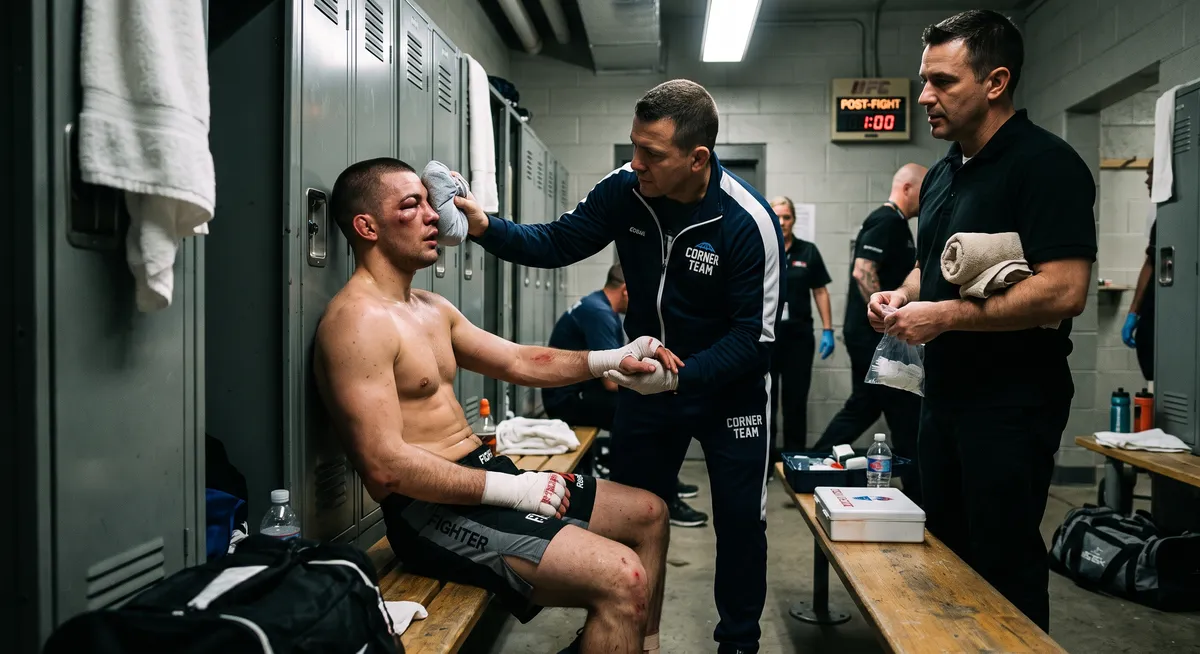
The quarter hour following the final horn is what dictates a fighter’s life for the month ahead. You take your damage in the cage or ring, but it is in the locker room where a career is either put on the shelf or preserved. Do not mistake post fight recovery for ice baths and the odd cheat meal; this is triage.
01. Triage in the Locker Room
The body makes you pay for it right away. Before the adrenaline even runs its course there is the facial puffiness, the sheared muscle from a hard grappling session, and the sub concussive toll of leg kicks and head strikes.
Under the Unified Rules of MMA no one leaves the venue after a sanctioned bout without a medical evaluation. The Nevada or California State Athletic Commissions will look at the results of that exam and hand down their suspension timelines. We are talking anything from a brief administrative hold to an extended medical suspension in the wake of a knockout.
But the paper trail and the reality do not always align. A fighter may be given the all clear by the commission to train again while still nursing some brain inflammation the exam was not built to detect. Cornermen know the cost of that. They will let an athlete stand under the hot lights and the din of the crowd to put on a show for the cameras, but every minute of that is stimulation the nervous system has no use for and it only puts off the ringside exam.
02. The 72-Hour Rule: Put the Brain at Rest
You can treat the physical aches but the cognitive load is often left to fend for itself, and that is the danger zone. After five rounds of absorbing sub concussive hits, the brain needs time to recover metabolically before it is put back in front of screens and noise.
If a TKO comes from blows to the head, the Association of Ringside Physicians’ consensus is a 30 day minimum off from sparring and competition, with the covering physician having the say to make it longer after a hard fought affair.
FIGHTER TAKEAWAY: Give your central nervous system the quiet it needs to mend. For the first three days after a war, stay away from video games and bright screens.
03. Bruises, Swelling and Inflammation Done Right
There is a temptation to pile on the NSAIDs and ice, but that can work against the body’s own signals. Some level of inflammation is necessary to remodel tissue; stifle it and you slow the clearing of a hematoma.
Better to let light compression and some easy stationary cycling do the work of lymphatic drainage on a deep contusion. Pair lean protein with fatty fish and greens for repair rather than relying solely on pharmaceuticals.
WATCH OUT: Unless a doctor says otherwise, do not try to numb out with high dose NSAIDs in the immediate aftermath. Non steroidal anti inflammatory drugs thin the blood and could complicate an undiagnosed head injury or lead to internal bleeding.
04. Dealing with the Adrenaline Hangover
It is a neurochemical crash as much as a physical one. The cortisol and adrenaline run through the roof during the bout and then drop off when the threat is over. That is why a fighter is left feeling flat or foggy for days instead of riding a wave of triumph. There is a crash that comes with it, one that puts the immune system on the back foot at the very time the body requires it for tissue repair. Most fighters would have a hormone panel to prove they need a reset of both the hormonal and immune systems; you can facilitate that by rehydrating with fluids high in sodium, putting in some dark, low stimulation sleep and tending to gut health after a fight week water cut.
Then there is the matter of what cannot be seen. A fighter may put in a decisive win but find himself in a fog for the week after, irritable and lacking drive. It is all down to the whiplash of the fight’s hormones. The trick is not to view this as something having gone wrong and panic an already run down system into more stress, but to accept it as part of the comedown.
05. The Phased Return: From Couch to Canvas
If one is in a hurry to get back to live rounds before the brain and tissue have healed, a minor injury will become a chronic problem. A staged return is the way to respect the timeline.
Week 1 is for complete rest, with an emphasis on the brain and nothing more taxing than an easy walk. By week two, zone 2 cardio and light mobility are introduced, but no head contact. Week three allows for some technical drilling at a low level of intensity, though sparring is still off the table. It is not until week four that there is a gradual move back to live contact and only with a coach looking on.
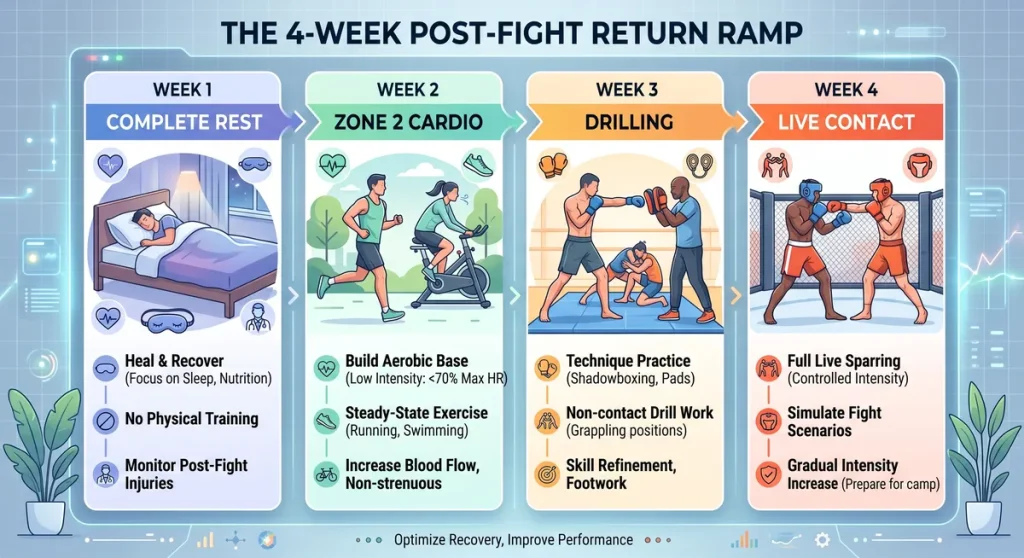
The UFC Performance Institute has an approach to recovery that is built on this sort of staged loading, using a mix of physical and nutritional therapies instead of making a simple yes or no call on when to spar. In the end, a protocol must outlast the soreness. Swelling will be gone in a few days, but the brain and hormones require the full runway to come around. To skip that is to risk turning a hard fought bout into a career shortener.
FAQ Section
What should be done first?
After the bell, any official ringside medicals need to be completed. Then rehydrate with something with good sodium content, have a meal of clean carbs and protein and make sure to get some unstimulated sleep in the dark. This takes care of the immediate physical demands before moving on to anything else.
How long before a combat athlete can spar again?
A minimum of three or four weeks without head contact is advisable to let any micro trauma or inflammation in the brain settle, even if there was no visible knockout or medical suspension. If a TKO loss means a formal 30 day hold, then so be it.
Why the sickness or depression a few days out?
The physical toll and the sudden drop in adrenaline and cortisol bring on a sharp hormonal crash. It is enough to put the immune system and mood in the doldrums for a while.
Dealing with bad leg kick bruises and hematomas?
Gentle compression and some non weight bearing movement like stationary cycling will help with lymphatic drainage without pulling on torn fibers. Heavy NSAID use is best left to a physician’s discretion.
Is it wise to pop pain relievers right away?
Not at high doses. NSAIDs thin the blood and can hide the signs of undiagnosed internal bleeding or head trauma. Any management of pain beyond the norm should be cleared by a doctor first.
- The most frequent error in recovery is to think the commission’s mandated suspension clock and the actual healing process are one and the same.
- The Association of Ringside Physicians will put a 30 day bar on sparring after a TKO from head strikes, and longer for the really grueling ones.
- Do not mistake the post fight dip in mood for anything less than a physiological event; the fall in cortisol and adrenaline does suppress the immune function.
- Overdoing on the icing and NSAIDs in the opening days will stifle the inflammation required for repair.
- A four week plan that moves from total rest to supervised contact is what protects the deep tissue and the brain, unlike a generic fitness deload.

Author’s Note
Enjoyed this breakdown? Hit the subscribe button to get our latest documentary drops and fight camp analysis sent straight to your inbox before they go public.
Support Independent MediaAPEX STRIKE GEAR
Official Training & Equipment Partner of EOF. Elite gear for elite performance.
Explore Gear →