

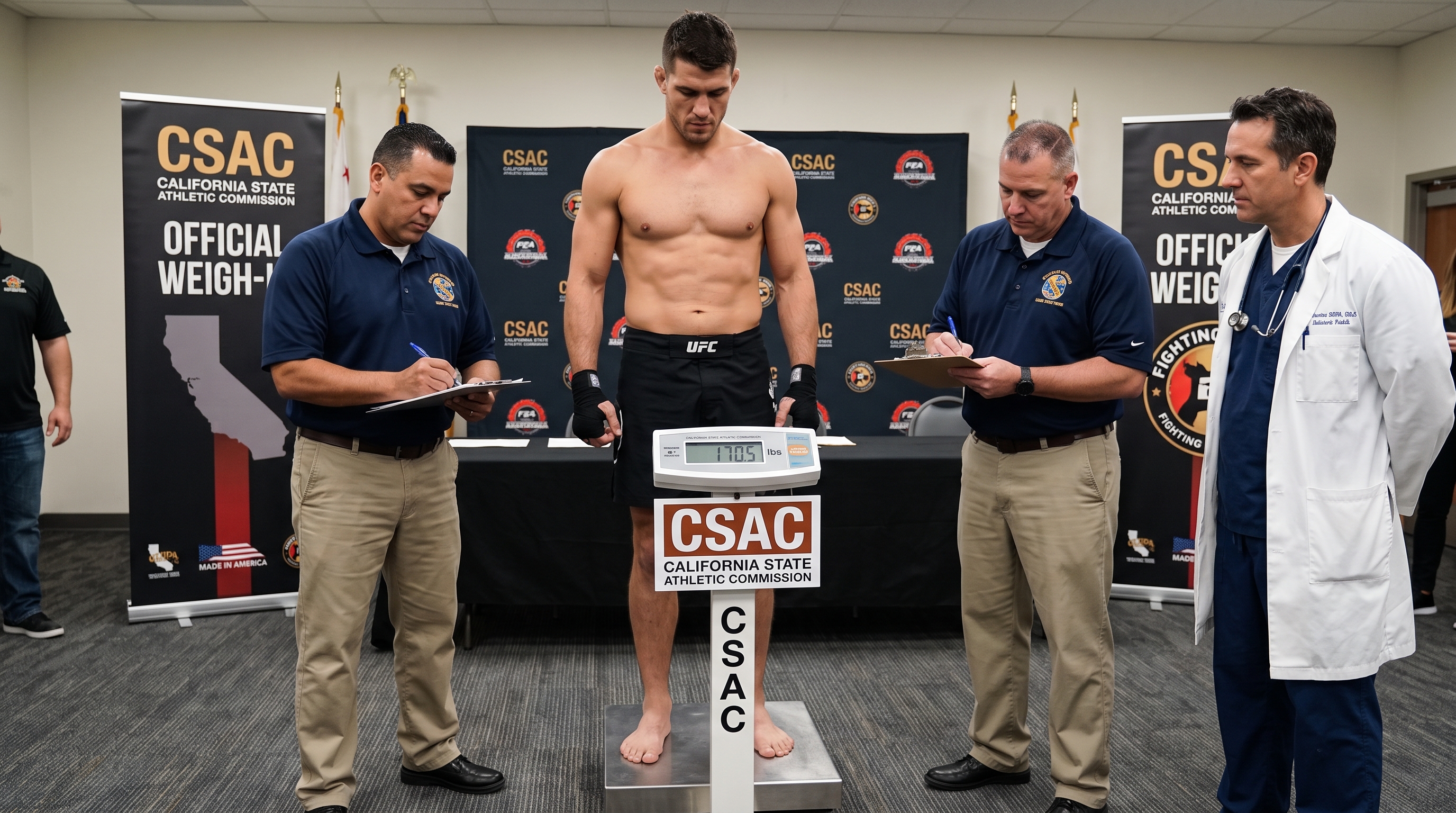
The 10 Percent Plan: An Explanation of CSAC Weight Cutting Rules
CSAC Weight Regulation Rules Explained: How California Polices Extreme Cuts
Where most state athletic commissions will run a fighter through the scales once and leave it at that, California is not so accommodating. The California State Athletic Commission has put in place a regulatory apparatus to deal with the reality that some athletes were arriving at the cage far too large after putting themselves through an ordeal of water cutting. To get a handle on CSAC weight cutting rules is to understand the need for that extra measure.
01. The California Standard
Making a contracted weight class by any means necessary is no mere formality. Depriving the body of water in such an aggressive fashion is not a cosmetic matter; it depletes blood plasma and puts undue strain on the kidneys. More importantly, without the cerebrospinal fluid to act as a buffer in the skull, a dehydrated brain is at greater risk from an impact it might have otherwise taken safely.
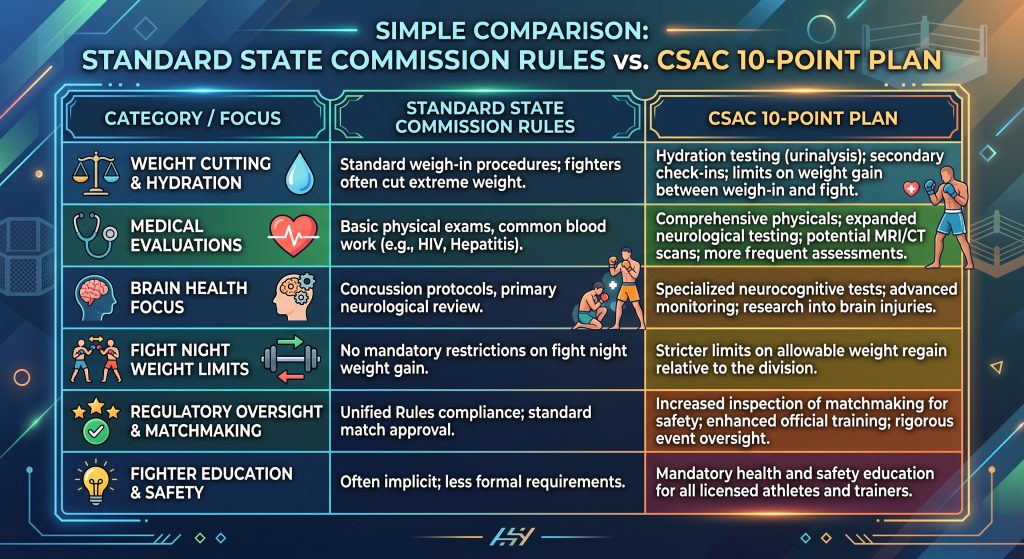
Andy Foster, the executive officer at CSAC, was the one to drive the commission to reform when figures indicated MMA fighters were routinely making up 8 to 18 percent of their body weight between the time they weighed in and the night of the event. The result was a 10-point plan sanctioned in May 2017 that calls for a second weigh-in on the day of the fight and imposes licensing limits on those who repeatedly flout the rules.
02. The Fight-Day Scale
What sets California apart is simple. In addition to the official weigh-in some twenty-four hours prior, a fighter must step on the scale again on fight day. The number is then put in context with what was cut in the first place.
Put back on in excess of 10 percent of the agreed upon fight weight and CSAC will flag the athlete, usually with a directive to move up a class for any subsequent bouts in the state. Exceed 15 percent and the commission is within its rights to call off the fight altogether.
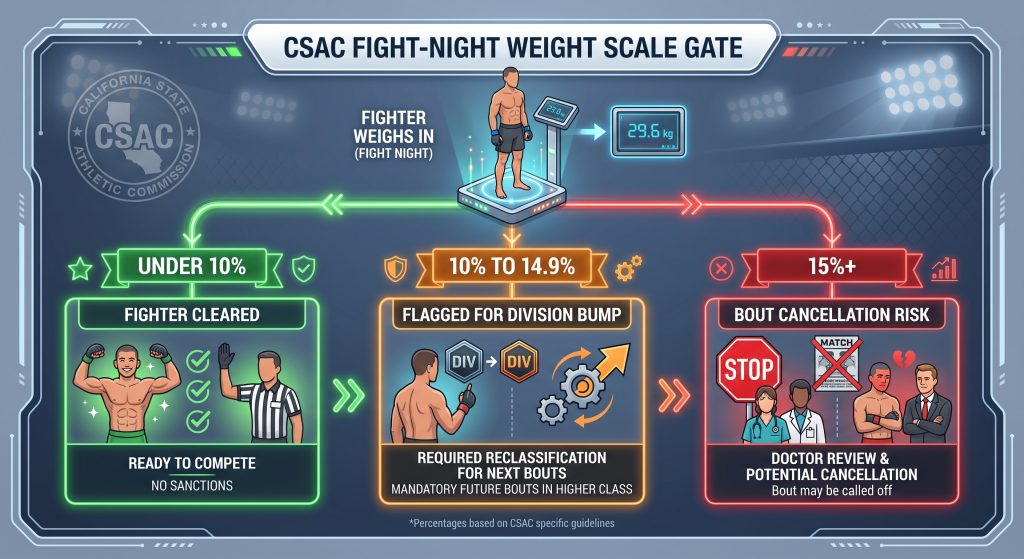
It is not an idle threat. In October 2019 the commission made unanimous the decision to exercise that cancellation power after reviewing data that showed a good many California cards were being compromised by it. A post-mortem would have seen several UFC fights in the state nixed under the rule, one of them a bantamweight title eliminator where the fighter had put on 18 percent before the bell.
BY THE NUMBERS: An official flag from the commission is triggered in California if more than 10 percent of body weight is regained on fight night, along with a recommendation to be moved up a class.
03. Hydration and Fines
The scale does not tell the whole story. A fighter can make weight while running on dangerously low fluids, so CSAC physicians do not clear an athlete medically without a urine specific gravity test to screen for the concentrated output of dehydration.
WATCH OUT: Making the numbers on a Friday morning is only part of it in this state. Ringside doctors have the authority to remove an athlete from the card for severe dehydration if the test is failed, well before he gets on the scale.
Then there is the cost of it. The CSAC plan includes a financial penalty for missing the mark on the scale. A portion of the purse is forfeited, with the funds going to the commission and to the opponent who is left with a size disparity that was not part of the original agreement.
04. Licensing by Weight Class
In fact, the CSAC approach is not limited to the week of the event. There are consequences for fighters who make a habit of missing weight. They can be put in a higher division until the commission has signed off on a return to the lower class, and only after a physician has given medical approval.
When it comes to a major title fight, CSAC will have its verification checkpoints earlier than usual, say 30 or 10 days before the event. This is to give officials an opportunity to stop a fighter from making an unrealistic cut before it turns into an emergency come fight week. Most of the coverage on competitor weight cutting fails to appreciate this kind of early intervention, tending to view weigh-in day as the sole point of regulatory contact instead of one part of an ongoing process.
The trade-off is something any fighter will feel. A camp that has to accommodate early verification does not allow for the last minute crash cut some have been accustomed to in order to force their way into an unrealistic division. The result may be having to put in the work at a more physically taxing weight class. Any short term competitive edge that is lost is made up for in the long run by sparing a career the toll of repeated hard cuts.
05. The Future of Combat Sports Weight Management
California has set a standard that is being looked at well beyond its borders. With the Association of Boxing Commissions coordinating data on those who are repeat offenders, a fighter marked in California cannot just cross state lines and do the same dangerous thing under a looser jurisdiction.
For coaches and fighters the lesson is straightforward. Make a plan to come in under the 10 percent rebound threshold with room to spare. Put hydration recovery in the camp schedule so there is no need to scramble during fight week, and approach the scale check on fight day with the same gravity as the official weigh-in. The rules are in place because unmonitored extreme dehydration has already seen fighters end up in hospital.
FAQ Section
What is the 10 percent rule?
Should a fighter put back on more than 10 percent of his contracted weight between the morning of the weigh-in and the night of the bout, CSAC will flag him and generally see to it he moves up a division for his next California appearance.
Does CSAC have the power to cancel a fight over weight?
They do. If an athlete is over 15 percent in regain by fight night, the commission can call off the scheduled bout. The regulations treat the size disparity and what amounts to extreme dehydration as a medical hazard, not a matter of competition.
What happens financially if a fighter misses weight?
Under the CSAC plan the fighter is out of pocket for part of his show money. Some of it goes to the commission and some to the opponent who is left with an unanticipated size disadvantage.
How is dehydration measured?
Ringside doctors will run urine specific gravity tests at the official weigh-in. It is a way of screening for dangerous markers even in an athlete whose body weight technically meets the contract.
Are other commissions as strict?
Not all of them, but California’s 10-point plan is a common reference. The fact that the Association of Boxing Commissions keeps tabs on repeat offenders across states means a fighter cannot easily sidestep oversight by going elsewhere.
- Approved in 2017 by executive officer Andy Foster, the 10-point plan was a direct answer to figures showing fighters would routinely regain 8 to 18 percent of their body weight prior to a contest.
- It is the separate scale check on fight day that enforces the state’s rebound thresholds.
- A 10 percent gain puts a flag on the division; go over 15 percent and CSAC can legally cancel the fight, a provision formally put in place in 2019.
- Urine testing will reveal the sort of dehydration a number on the scale would not.
- As for those who are habitual offenders, they are restricted to a higher division until a doctor says otherwise.

Author’s Note
Enjoyed this breakdown? Hit the subscribe button to get our latest documentary drops and fight camp analysis sent straight to your inbox before they go public.
Support Independent MediaAPEX STRIKE GEAR
Official Training & Equipment Partner of EOF. Elite gear for elite performance.
Explore Gear →