

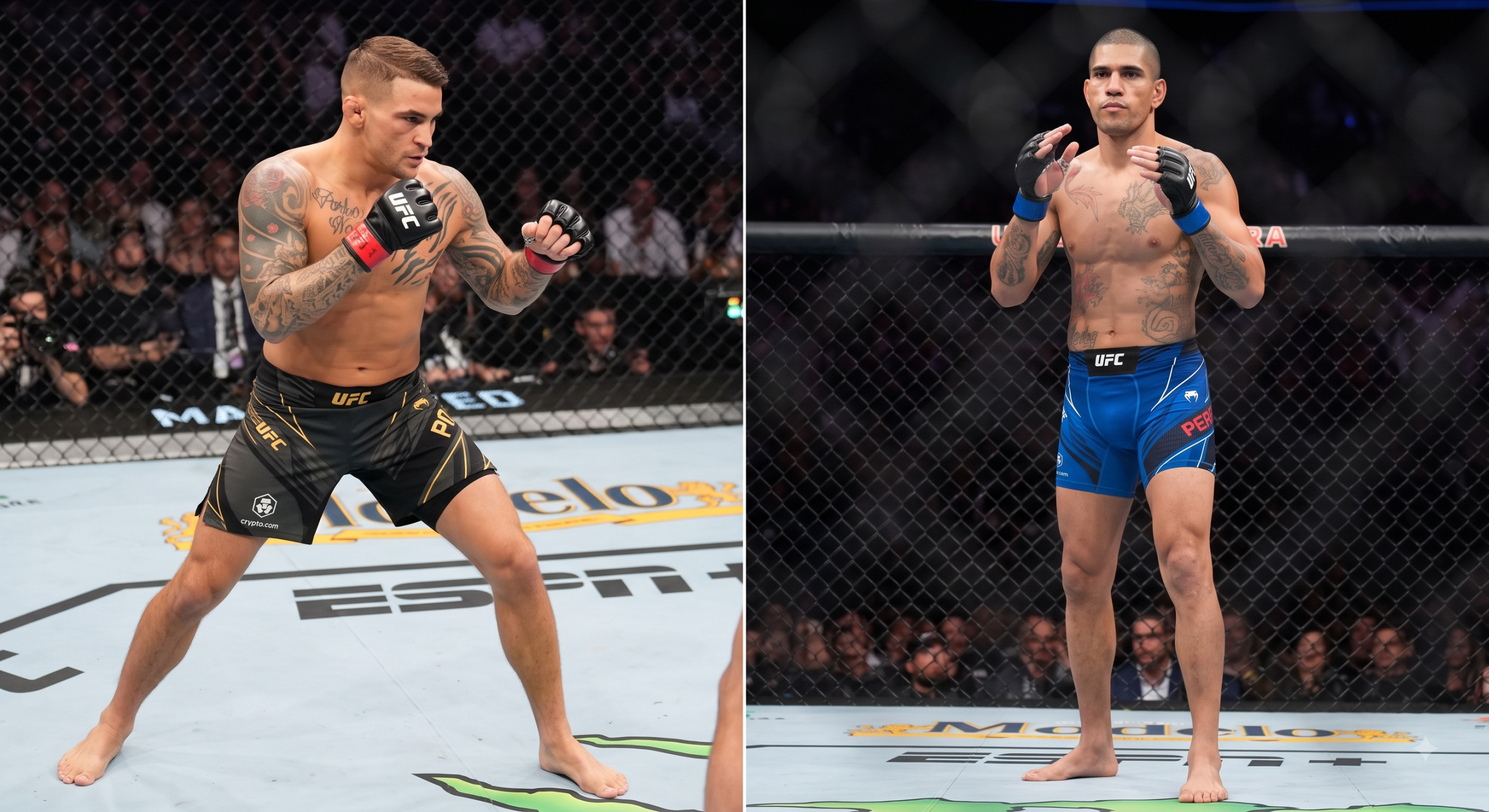
Boxing vs. Muay Thai Stances in MMA
Boxing vs. Muay Thai Stances in MMA: Adapting for the Takedown
Put a pure boxer in the Octagon and their front leg gets chopped down with calf kicks. Put a pure nak muay in against a wrestler, and they get driven through the canvas by a double-leg before they know what hit them. Striking in MMA isn’t about picking a side between boxing or Muay Thai — it’s about fixing the defensive blind spots both stances carry the moment wrestling is legal. Here’s how top UFC fighters adjust their hips, hands, and center of gravity to strike freely without getting grounded.
01. The Boxing Stance Trap: Bladed Hips and Heavy Lead Legs
A traditional boxer blades the hips 45 to 60 degrees, rear shoulder tucked behind the chin. That angle shrinks the target profile and shortens the path the rear hand travels to the chin — in a boxing ring, it’s close to ideal.
In a cage, the same angle turns into a structural flaw. Turning the rear hip away from the opponent makes it mechanically difficult to drive both hips straight down and back at once, which is exactly what a sprawl requires against a straight-line double-leg. What fighters discover once a wrestler starts hunting entries is that the rear side simply arrives too late to matter.
The front-foot weight bias creates a second problem. Loading the lead leg for jab and hook power puts real weight on a knee and shin that a wrestler — or worse, an outside low calf kick — can exploit directly. The kick targets the peroneal nerve rather than the bone, and once the lead leg’s load-bearing function is compromised, the same base that generated punching power can’t check a single-leg or plant for a counter.
FIGHTER TAKEAWAY: A bladed boxing stance gives you great jab reach, but it turns your rear hip away from your opponent. If you can’t drive both hips straight down into the mat instantly, your sprawl won’t stop a driving double-leg.
The trade-off: bladed hips and a loaded lead leg buy punching range and head mobility. They cost sprawl symmetry and lead-leg durability the second leg kicks or shots enter the exchange.
02. The Muay Thai Dilemma: Tall Posture vs. Level Changes
Traditional Muay Thai runs the opposite setup — hips square at 0 to 15 degrees, spine upright, 60-70% of the weight on the back foot, hands held high. That configuration checks kicks instantly and keeps the lead leg light enough to fire teeps and low kicks without warning.
Against a wrestler, the upright spine becomes the liability. A high center of gravity has further to travel before it’s low enough to stop a driving shot, and in practice, that half-second delay is the entire fight. By the time a nak muay registers the level change, the wrestler is already inside the hips.
The high, long guard compounds the issue. It’s built to intercept elbows and head kicks, but holding the hands wide and high uncovers the torso and waist — exactly where a wrestler wants an underhook or a body lock.
WATCH OUT: Standing tall in a high Muay Thai guard helps check kicks, but it obstructs your downward peripheral vision. Wrestlers rely on that blind spot to level-change underneath your hands before you even register the shot.
The trade-off: square hips and a tall posture preserve kick-checking speed and teep range. They cost the instant vertical drop needed against a committed double-leg.
03. The Hybrid Solution: Building the Takedown-Ready MMA Base
Elite UFC strikers run neither template unmodified. They build a compromise base around three adjustments:
- Semi-square hip orientation — roughly 30 degrees, splitting the difference between a boxer’s blade and a nak muay’s square stance so both hips can still drive symmetrically into a sprawl.
- 50/50 weight distribution across both feet, instead of loading the front leg for punching power or the back leg for kick speed.
- Lowered center of gravity — sinking the hips 2-3 inches below a standard boxing or Thai height, shortening the distance the base has to travel to smother a shot.
Jose Aldo remains the clearest working example. Rather than abandon his Muay Thai leg-kick game, Aldo dropped his stance height while largely keeping his hip mechanics intact, which let him check kicks and still reach sprawl position almost instantly — a significant part of how he held elite takedown defense numbers for most of his featherweight run. Dustin Poirier runs a modified boxing base for the same reason, shortening his stride and pairing shoulder rolls with a high guard so he isn’t overextended when a shot arrives.
Stride length matters as much as the static hip angle. Shortening the stance keeps the feet close enough to react to a shot without sacrificing the mobility needed to pivot off the lead foot and cut angles instead of retreating in a straight line.
The Takeaway
Your MMA stance is a dynamic compromise between offensive range and defensive readiness — it isn’t fixed, and it shouldn’t be picked out of style loyalty. Adjust hip height and stance width to the wrestling threat actually standing across the canvas.
FAQ Section
Q1: Can you use a pure boxing stance in MMA?
Pure boxing stances rarely work in MMA because a bladed posture exposes the lead leg to calf kicks and turns the rear hip away from the opponent. This severely limits lead-leg checking speed and ruins the ability to execute a fast, symmetric sprawl against double-leg takedowns.
Q2: Why does a traditional Muay Thai stance leave fighters open to takedowns?
Traditional Muay Thai uses an upright spine and a high center of gravity to check kicks and throw knees. This tall posture makes dropping weight rapidly difficult, leaving nak muay stylists vulnerable to explosive level-change entries down the center.
Q3: How do UFC fighters modify their stance for takedown defense?
Elite fighters adopt a hybrid base: semi-square hips around 30 degrees, balanced 50/50 weight distribution, and a slightly lowered center of gravity. This lets them check kicks, land power punches, and sprawl immediately when opponents shoot.
Q4: Who is a great example of a striker adapting their stance for MMA wrestling?
Jose Aldo is a strong example of this adaptation. He lowered his center of gravity from his traditional Muay Thai base, keeping his stance planted enough to throw damaging leg kicks while maintaining the hip mechanics needed to stop world-class wrestlers.
Recommended Internal Links
- “mastering defensive sprawl mechanics” → MMA Takedown Defense Fundamentals
- “defending the low calf kick” → How the Low Calf Kick Changed MMA Striking
- “managing distance in modern striking” → Footwork and Distance Management Drills for MMA
- “striking against high-level wrestlers” → How Strikers Neutralize Elite Wrestlers in the Octagon
- A bladed boxing stance maximizes punch range but turns the rear hip away from the opponent, breaking the symmetry a fighter needs to sprawl.
- A square, upright Muay Thai stance checks kicks well but is too slow to drop against a committed level change.
- The functional MMA compromise sits around a 30-degree hip angle, 50/50 weight split, and a base 2-3 inches lower than either traditional style.
- Jose Aldo’s lowered-hip, Thai-based stance remains the clearest working model for combining leg-kick offense with elite takedown defense.
- Stance selection in MMA should track the opponent’s wrestling threat, not stylistic loyalty to boxing or Muay Thai.

Author’s Note
Enjoyed this breakdown? Hit the subscribe button to get our latest documentary drops and fight camp analysis sent straight to your inbox before they go public.
Support Independent MediaAPEX STRIKE GEAR
Official Training & Equipment Partner of EOF. Elite gear for elite performance.
Explore Gear →