


Post-Weigh-In Refueling: A Rehydration Guide for the Female Fighter
Female Fighter Rehydration: The Problem with Copying Men From Weigh-In to Fight Night
Walk into most combat sports gyms and the rehydration advice on offer was put together with male physiology in mind, then doled out to women as is. You can see the outcome on fight night: a fighter with a distended stomach and flat legs who has technically put in the required fluids but never managed to get them where they are supposed to be.
01. The Scale Trap
There is a tendency to treat sex as an afterthought when it comes to fluid strategy. Cookie cutter plans put forward the same timing and volume for anyone stepping off the scale, and within twenty four hours that oversight has a physical cost.
A woman on a male oriented protocol may find her footwork is sluggish and her energy non-existent come fight time. It is not for want of drinking enough; the fluid simply did not make the journey from her gut to her blood in time. The 24 hour period before a fight is not some universal biological clock. For a female athlete it operates on a different timeline than it does for a man, and any plan that fails to account for that is flawed from the outset.
This is overlooked because so much of the nutrition guidance in our sport is extrapolated from studies done on men. What suits a heavier male cutting a lot of bodyweight does not translate to a female with a different hormonal profile and a different way of handling sodium.
02. Hormones and Fluid Movement
Whether a fluid is of use in the bloodstream or ends up pooling somewhere else is down to how the kidneys handle sodium, which is in turn governed by estrogen and progesterone.
The research is clear on what happens to plasma volume over the course of a menstrual cycle. In the luteal phase, high levels of progesterone will block the hormone that holds onto sodium, increasing its excretion through urine. Estrogen works the other way and promotes retention. When a fighter is in a high hormone phase she is at odds with a shifting sodium balance no matter what she does at the scale.
It is the distinction between being hydrated at a cellular level and having unusable water bloat. One cools the muscle and puts volume back in the blood; the other is just dead weight in the stomach or soft tissue.
03. Put Some Distance Between the Scale and the First Sip
After getting off the scale the urge is to put as much fluid in as you can right away. Do not give in to it. Pouring a large amount of plain water into an already taxed system will only dilute what electrolytes are left and leave the water sitting idle in the gut.
WATCH OUT: Chugging massive volumes of water straight after the weigh-in is counterproductive. It floods the stomach and the water never makes it to the bloodstream.
A sounder approach is to start with room temperature hypotonic drinks, those with a lower solute concentration than blood, and introduce sodium in a measured way rather than all at once. The gut will move fluid more quickly if there is a little glucose to transport with it, so having a small measure of carbohydrate with those fluids hastens intestinal absorption over plain water by itself.

FIGHTER TAKEAWAY: In the first two hours, sip on sodium-rich, hypotonic fluids at 10 to 15 minute intervals. The idea is not to appear full in an instant but to put enough fluid into your vascular system that the brain and muscles are properly fueled for round one.
04. Fight-Night Readiness: Power Output, Full Recovery and Brain Protection
There is more to rebuilding plasma volume than mere comfort. If a fighter’s heart has to work overtime in round one to make up for low circulating blood, it will tire faster than it ought to, no matter how good her technique looks in warmup.
Then there is the safety issue of restoring cerebrospinal fluid. Without its normal cushioning, the brain is left exposed to impacts it would otherwise be fine with. For that reason, the rehydration window is as much a safety protocol as it is for performance.
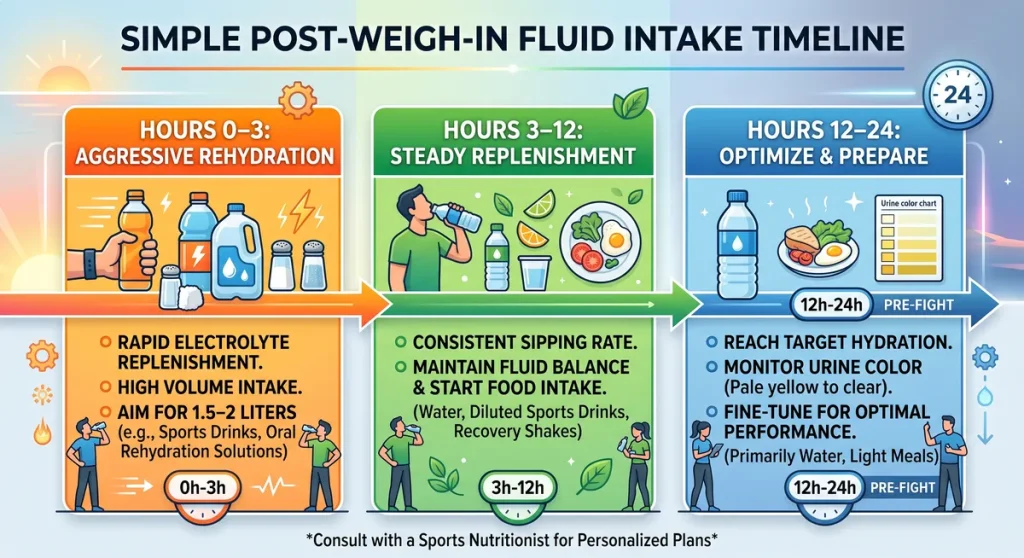
A straightforward timeline is best: from hour zero to three, take small, frequent sips of something with sodium; between hours three and twelve, start moving back to regular meals while keeping up the electrolytes; and in the 12 to 24 hours before walkout, do a final check on energy levels and hydration color.
That said, this is a general framework and does not supplant the advice of a sports dietitian who knows the demands of a fighter’s weight class and cycle timing. A woman cutting weight in a high hormone stretch may have a coach alter the fluid timing and sodium ratios on the spot rather than stick to some rigid plan.
FAQ Section
Why is rehydration after the scales so hard for female fighters?
It comes down to hormonal shifts. Elevated estrogen and progesterone alter kidney function when it comes to sodium and fluid regulation. The result is often fluid sitting in the stomach or pooling in extracellular tissue instead of getting back into the blood stream.
How long to get the brain cushioned back up after a cut?
You are looking at 24 to 36 hours for a complete restoration of blood and cerebrospinal fluid. Neglect the electrolyte balance and the fluid will not cross cellular membranes in time to offer proper protection come fight time.
Is it wise for a female fighter to reduce sodium post-weigh-in?
Not at all. You need the sodium to draw water into the vascular system. But to avoid any digestive trouble or skin retention, the approach should be precise sodium-to-potassium ratios in smaller, more frequent sips.
What about the menstrual cycle and water cuts in fight week?
In the luteal phase you have higher progesterone which raises body temperature and holds on to water. That makes the cut a harder sweat and slows things down in the rehydration window.
- One size fits all rehydration plans made for men do not account for the way hormones dictate fluid and sodium in a female fighter, which can leave them technically hydrated yet functionally empty and bloated.
- With estrogen driving water retention and progesterone increasing sodium loss in the luteal phase, where a fighter is in her cycle will determine how difficult the rehydration is.
- Do not chug large amounts of plain water right off the scale; it dilutes electrolytes and the fluid remains in the gut.
- A better bet is a sodium rich hypotonic drink with some carbohydrate in small doses for quicker absorption.
- Remember that 24 to 36 hours is what it takes to fully restore plasma and cerebrospinal fluid, so view the rehydration window as a safeguard against concussive injury, not just a matter of performance.

Author’s Note
Enjoyed this breakdown? Hit the subscribe button to get our latest documentary drops and fight camp analysis sent straight to your inbox before they go public.
Support Independent MediaAPEX STRIKE GEAR
Official Training & Equipment Partner of EOF. Elite gear for elite performance.
Explore Gear →