


Fighter Rehydration Protocol: Recovering After the Weigh-Ins
The Fighter Rehydration Protocol: How to Rebuild Power and Protection
You have made weight, but that is only half of it. The outcome of the fight is often decided in the manner a fighter handles the initial two hours once he has left the scale. This is an active strategy with a set schedule, not a case of drinking water and hoping for the best. Do the sequence wrong and you are without power or cardio; in some instances you have even put the protective layer around the brain at risk.
01. The Golden Hour
In the first 60 minutes off the scale, the Oral Rehydration Formula is key. Most advice given after a weigh-in overlooks this, but room temperature fluids are preferable to ice cold. The digestive tract is already running slow from dehydration and should not have to expend energy regulating a temperature change before it can start to absorb. That is what separates a drink that gets into the bloodstream from one that lingers in the gut and causes trouble.
Sodium and glucose must be paired. The former provides the osmotic pull to get water from the gut to the blood; the latter puts the co-transport mechanism in the intestinal wall to work for a faster uptake. The International Society of Sports Nutrition’s position on combat sports is clear: an oral rehydration solution with 50 to 90 millimoles of sodium per liter should be the priority, at a rate of 1 to 1.5 liters an hour.
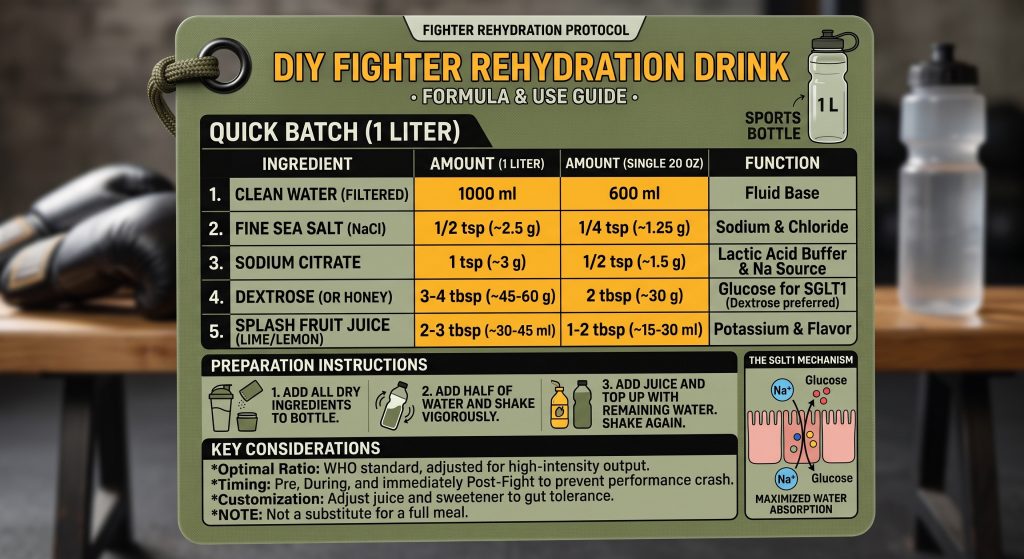
But do not chug a liter at once. A fighter who does so in two or three large swallows will find the stomach cannot move the fluid to the small intestine fast enough, resulting in the bloating and nausea that is common in those first few hours. Sip 250 to 300 ml every quarter hour instead.
WATCH OUT: There is no place for ice water or a heavy meal right after the scale. With digestion slowed by the dehydration, putting cold liquid or fat in the gut will bring on cramping and keep the body from taking in what it needs.
02. Fueling Hierarchy
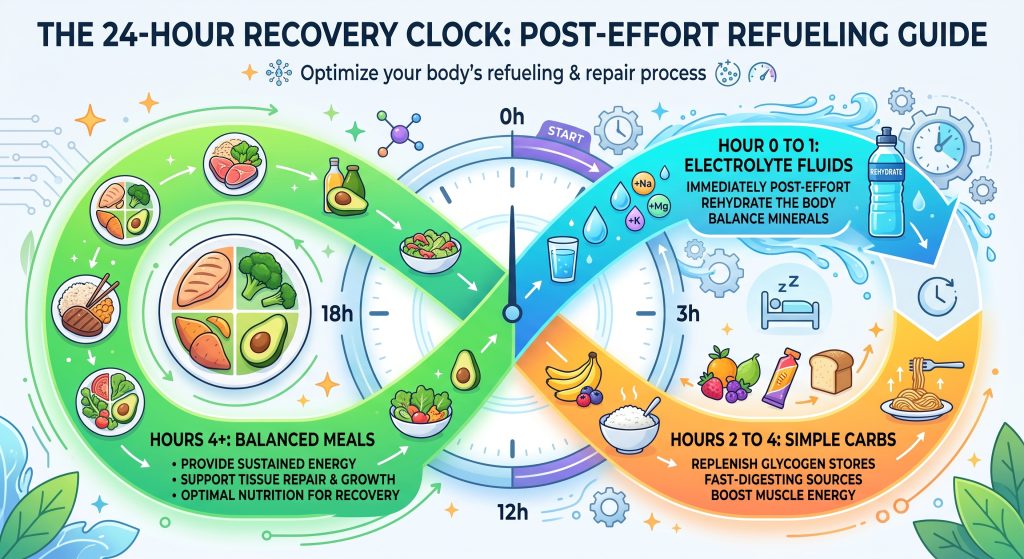
For the first couple of hours, stick to liquids. A dehydrated system is not up to processing solid food and it would only stand in the way of the fluid absorption that is most pressing.
Once you hit the second hour, let easily digested carbs do the work of replenishing glycogen lost to the tapering earlier in the week. Think white rice, ripe bananas or a puree. The ISSN position stand suggests up to 60 grams of fast acting carbohydrate per hour, which for a fighter with significant depletion in camp works out to 8 to 12 grams per kilogram of body weight.
Leave the fibrous vegetables and fats for later. Fat retards gastric emptying when you want things moving through you, and fiber is just too much bulk for the backstage environment. The point in these first four hours is proper sequencing, not a well rounded meal.
03. The 24-Hour Reality Check
A fighter may feel his mouth and muscles are back in shape after a few hours of doing the protocol right, but there is more to it than that. There is a danger gap that most fighters do not give enough thought to, and it lies in the mismatch of how cerebrospinal fluid behaves. This layer, which is there to cushion the brain from the skull, works on a far slower timetable than a fighter’s sense of being hydrated.
With amateur same day weigh-ins, for instance, there is no real window to recover between making weight and stepping into the cage. The water cut is still having an effect on brain protection when the opening bell sounds. Professional MMA has a 24 to 36 hour window for its weigh-ins to put an end to that kind of risk, allowing the cerebrospinal fluid to rebuild before any strikes are taken.
FIGHTER TAKEAWAY: Your muscles will rehydrate in a matter of hours; the fluid around your brain will not. It can take a full 24 to 36 hours. Under same day rules, a minimal water cut is the only way to be sure your head can safely handle the impact.
04. Fight Day Morning: The Final Readiness Check
Urine Color, Muscle Fullness, and Pre-Fight Meals
A fighter or his corner would do well to run a couple of field checks on fight morning to see if the rehydration protocol has done its job, as opposed to going by subjective feeling. A normal resting heart rate and urine the colour of pale straw are the easiest indicators.
As for the final pre-bout meal, let it be something of balanced carbohydrates and lean protein, not anything heavy or fatty, and have it 3 to 4 hours before the walkout. That gives the food the runway it needs to be digested and turned to energy so it is not sitting in the stomach for the first exchange.
Rehydration Is Not an Afterthought
The scale may make the bout official, but it is rehydration discipline that tells you if a fighter is walking into the cage as a champion or an empty shell on muscle memory. Put as much precision into the recovery drink as one does with sparring rounds and the protocol will be what separates performance from merely getting through the night.
Frequently Asked Questions
How much should be consumed right after the scale?
About a liter of electrolyte solution an hour for the first two or three hours. Do not try to guzzle it down in volume; the stomach will be overwhelmed and the kidneys will flush the water out before your muscles have a chance to take it in.
Are commercial sports drinks sufficient?
Not for the level of dehydration in combat sports. They tend to be too high in simple sugar and short on sodium. Dilute them with water and add an electrolyte packet or some salt for best results.
What is the role of sodium in fight week?
It is essential because sodium is a magnet for water in the cells and bloodstream. In its absence the body will not hold onto fluids and you will just urinate out what you have put in.
When is a fighter fully rehydrated?
You may feel your plasma and muscles are back in order in 12 to 18 hours, but do not count on the protective layer around the brain being restored for at least 24 to 36 hours.
- The ISSN position stand is clear on this: oral rehydration solutions in the range of 1 to 1.5 liters per hour are superior to plain water because of the way sodium and glucose draw fluid into the blood.
- And while one might want to chug, sipping 250 to 300 ml every 15 minutes is more effective given the limited rate at which the stomach can pass fluid to the small intestine.
- Leave solid food until the second hour and fats even longer; a dehydrated gut has other priorities than complex digestion.
- Remember that the core problem with same day weigh-in formats is that time needed to restore the cerebrospinal fluid.
- And on fight morning, let the pale straw colour of the urine and a steady heart rate be the confirmation that rehydration has been successful.

Author’s Note
Enjoyed this breakdown? Hit the subscribe button to get our latest documentary drops and fight camp analysis sent straight to your inbox before they go public.
Support Independent MediaAPEX STRIKE GEAR
Official Training & Equipment Partner of EOF. Elite gear for elite performance.
Explore Gear →