


Walking Weight for Fighters: An Off Season Diet for Combat Sports
Combat Sports Off Season Diet: How to Manage Walking Weight Between Camps
You will not see this part of a fighter’s career in the highlight reel. It is those four to six weeks after a bout when the scale goes up and no one in the corner makes a fuss about it. Yet from one camp to the next, that kind of quiet drift is what determines if your eight week block is used to put on the pounds or to hone your craft.
An off season diet should not be a source of misery. Proper management puts a ceiling on your walking weight to stave off the hormones responsible for post fight cravings. It allows the camp to concentrate on the double leg, the guard passing and the calf kick that are the real difference makers in a fight.
01. The Ballooning Trap: Why Off Camp Weight Spikes Are a Problem
A fighter knows the feeling of relief as soon as he is done with the scale at weigh ins. After weeks of water play and restriction, the body wants its due.
But if that feeling gives way to three or four weeks of eating without restraint, the scale will keep going up. A featherweight putting in fifteen to twenty percent above his contract is not just lugging around extra fat; he has created a training issue. The first half of the next camp is now devoted to stripping mass instead of working the sequences that win rounds.
In many ways, the camp has failed before the fight is even on the card. You will have strength and conditioning coaches running metabolic circuits to torch fat when they should be building the explosive power required for round three. The technical side of things is left wanting because too much of the eight weeks is eaten up by a fat loss boot camp.
WATCH OUT: Start camp more than fifteen percent over your division and you have a weight loss program on your hands, not a place to prepare for a fight. All your energy goes into shedding the fat.
02. The Safe Ceiling: What Your Walking Weight Should Be
Forget goal weight. In MMA, boxing or grappling there is a ceiling that is most important to an off season diet.
For the majority of athletes, walking weight ought to be no more than eight to twelve percent of the contracted limit. Take a lightweight who is 155 on paper; if he is 165 to 172 walking into camp he is fine. There is ample room to make the cut and shed some water and glycogen without having to resort to the kind of extreme dehydration the Association of Ringside Physicians write position statements about.
Go beyond twelve percent and you are in a yellow zone where the cut is survivable but not pleasant. Once you are over fifteen percent the body has to be put through aggressive sodium and water manipulation in the last day or two, which is why commissions like the NSAC and CSAC have made their rules stricter.
Walking Weight Zones
| Zone | Percentage Above Limit | Camp Impact |
| Green Zone | 8 to 10% | You can make the cut and still focus on skills |
| Yellow Zone | 11 to 14% | Some time is lost to fat loss, the cut is harder |
| Red Danger Zone | 15%+ | Extreme dehydration risk, camp is now a weight loss program |
03. Reverse Dieting: Breaking the Post Fight Binge
It is not a matter of discipline when a fighter overeats after a contest. Prolonged caloric deficits and the dehydration of fight week have thrown leptin and ghrelin out of whack. As soon as camp is over and the hormonal suppression is gone, the rebound is swift and severe.
Reverse dieting is the way to structure your way out of it. There is no need to go from a fight week deficit to an open bar on calories. A better way is to put the calories back in slowly so the metabolism and hormones can find their balance, sidestepping the ballooning trap of rapid fat gain.
FIGHTER TAKEAWAY: Do not make the mistake of going from a hard fought cut straight to a buffet. Reverse dieting is the answer. Add two or three hundred calories a day each week to get your walking weight back in order without wrecking your metabolism.
The International Society of Sports Nutrition has done the research on energy availability in combat athletes and it bears this out. Their findings show that a staged return to maintenance calories is far superior for preserving lean mass and metabolic function than an abrupt one.
04. Off Season Fueling: Building Strength While Staying Lean
With the hormonal rebound put to rest, the off season diet has a new job to do. This is a performance fueling phase, not a deficit one. The aim is to put on strength, not uncontrolled fat.
A modest caloric surplus of nutrient dense carbs and high protein is what the conditioning work in off camp requires. For instance, hit 0.8 to 1 gram of protein per pound of bodyweight every day for muscle repair after a heavy session. Put your carbohydrates in around training time to top off glycogen for the explosive lifts and live rounds, as opposed to just spreading them out. And forget the daily scale; water and glycogen will fluctuate on their own. Check your body composition every couple of weeks instead.
You will see the same thinking in the UFC Performance Institute’s guidelines on year round management. They know that a controlled surplus builds usable strength where an unmonitored one only makes for a tougher weight cut later.
05. The Long Term Longevity Plan: Keeping the Scale Friendly Year Round
Decade long careers are not built on nutritional extremes. A veteran fighter has a walking weight he can hold in July or January, making camp a matter of tactics and not survival.
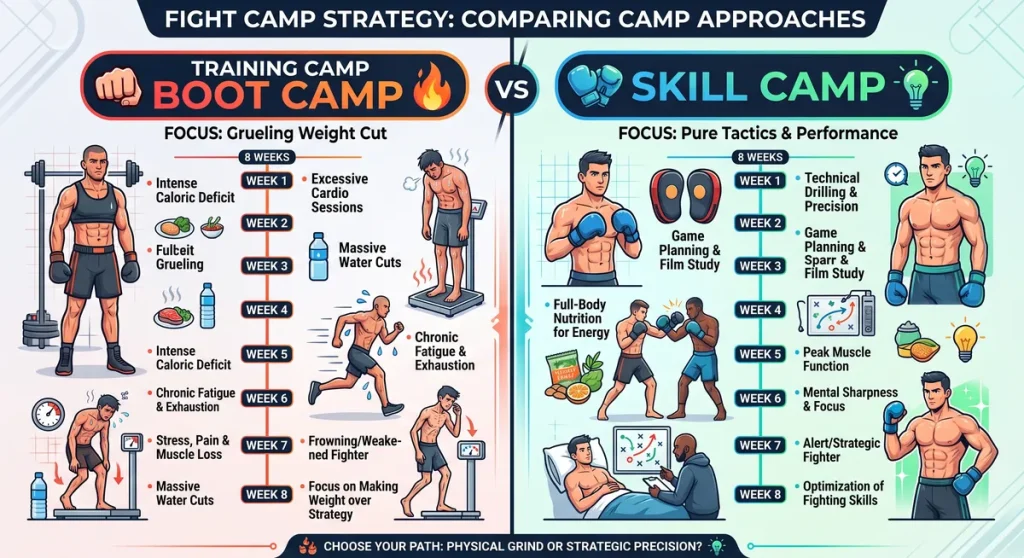
Consider the difference in approach between a boot camp and a skill camp. In the former, eight weeks are lost starving off fat before any technical work is possible. In the latter, the fighter is already lean and can concentrate on sparring sharpness and timing.
When a fighter views nutrition as a system for the whole year and not an emergency plan for fight week, he is in the green zone from day one. It is a habit that goes a long way in protecting the joints and the technical development a short camp can ill afford to sacrifice. Off season management is not about permanent denial, but holding a ceiling and reversing the rebound with some forethought.
FAQ Section
How much should a fighter walk at when not in camp?
For most, keeping the walking weight to within eight to twelve percent of the division limit is the mark to hit. That leaves the next cut manageable and spares the athlete from having to dump extreme amounts of water.
Why is there such a weight spike after a fight?
It is the hormones. Fight week brings severe dehydration and a long caloric deficit which upsets leptin and ghrelin. Once camp is over you will have intense cravings as a result.
What does reverse dieting entail?
Simply put, it is a way to raise your daily intake in a structured manner over a few weeks after the bout. You get your baseline metabolic rate and hormone balance back without putting on fat in a hurry.
Is it possible to add muscle in the off season and not suffer for it at the scales?
Yes. With a slight surplus of protein and good carbs and some tracking of body composition, a fighter can increase power while staying within safe walking weight limits.
- Keep the walking weight within eight to twelve percent of contract to ensure camp is for skill work, not fat loss.
- Do not mistake post fight binge eating for a lack of discipline; it is a hormonal reaction to the restriction and dehydration of the previous week.
- Add two to three hundred calories a week via reverse dieting to restore the metabolism without the fat.
- Off season strength comes from a slight surplus of timed carbs and protein, not from blowing past the walking weight ceiling.
- Those who avoid the extremes and keep a consistent weight range will be better off in terms of their cut, their joints and their technique.

Author’s Note
Enjoyed this breakdown? Hit the subscribe button to get our latest documentary drops and fight camp analysis sent straight to your inbox before they go public.
Support Independent MediaAPEX STRIKE GEAR
Official Training & Equipment Partner of EOF. Elite gear for elite performance.
Explore Gear →