

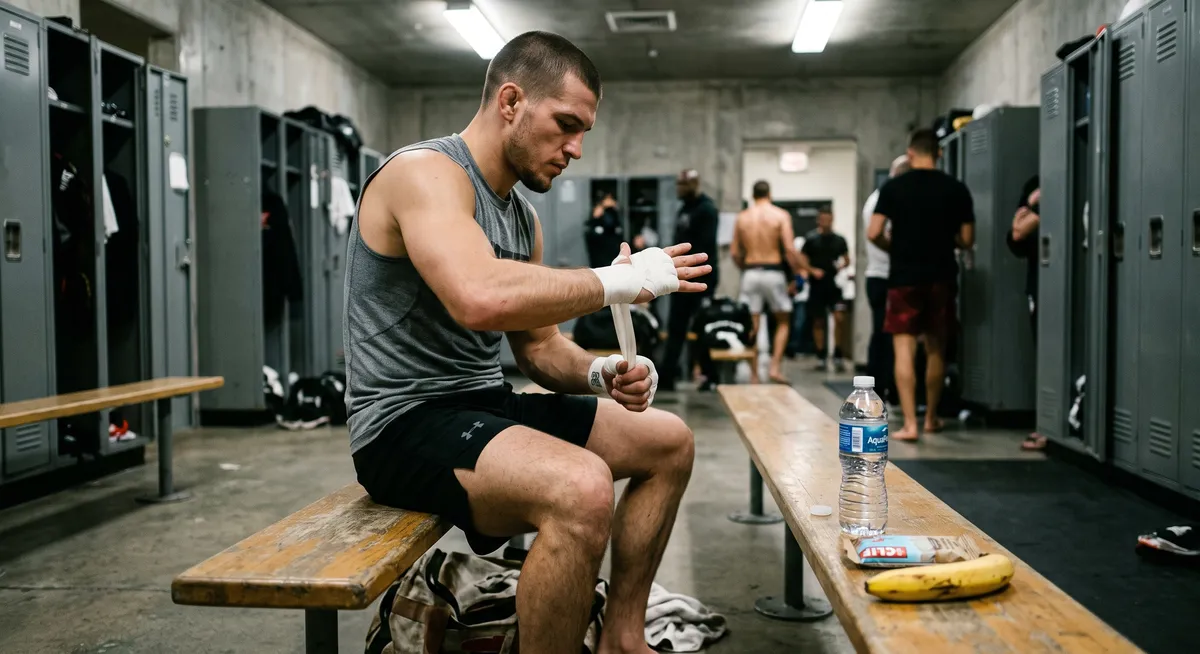
The Exact Countdown Meal Plan for Fight Night Nutrition
Fight Night Nutrition: The Exact Meal Timing Blueprint for Peak Energy
You will not find the same issues in everyday sports nutrition that one faces on fight night. A fighter’s stomach is operating under an entirely different hormonal load on walkout day than it does in a regular camp session; to treat it like any other training day is a sure way to have heavy legs by round two.
01. The Fight Day Trap: Why Adrenaline Changes Everything
The nervous energy ahead of a bout is more than psychological. Stress hormones put the sympathetic nervous system into overdrive. Studies on gastric emptying during exercise show that being keyed up is a direct impediment to how quickly the stomach can move food into the small intestine.
Every corner has witnessed the pattern: after eight weeks of clean, camp tested meals, a fighter will feel bloated or nauseous on the day of the fight from the very same fare. Do not blame the meal. It is the adrenaline.
WATCH OUT: Adrenaline will slow your digestion to a crawl. Put a high fat, high fiber meal in front of a fighter and what would take two hours to process in camp can sit in the stomach like a brick for five on fight night.
02. The Morning Phase: Building the Baseline Fuel Tank
What you eat first thing on fight day establishes the glycogen baseline for the rest of the countdown. Four to six hours prior to arriving at the arena, have a meal of white rice, toast or oats with a lean protein like egg whites or chicken breast.
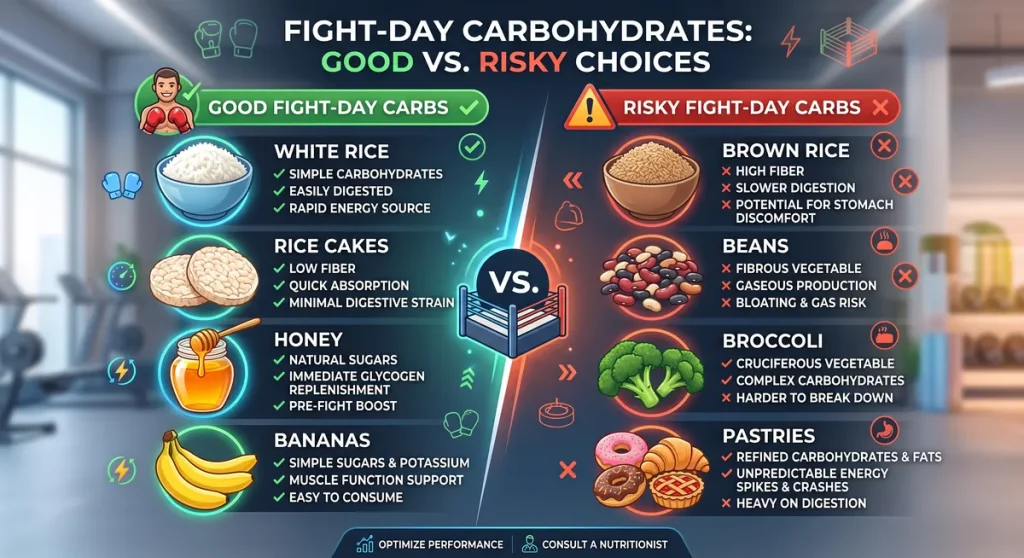
Make a point of minimising fat and fibre, not merely putting them lower on the list. In normal circumstances they slow gastric emptying, but add in the stress of fight day and a breakfast of beans, avocado or heavy dairy could still be in your system when the walkout music is cued.
It is a matter of trading off satiety. A low fat, low fibre option will not hold you the way your usual camp plan is designed to do while on a cut, but it is meant to clear the system with speed, which is the objective here.
03. The Countdown Timeline: What to Eat from 4 Hours to Walkout
If you want to stop guessing and have a protocol you can rely on, you have to time your intake to the walkout clock.
At four hours: your last solid, balanced meal of the day. Simple carbs, think bananas or white rice, and a modest amount of lean protein.
Two hours out: leave the solids behind for some liquid energy in the form of an electrolyte carb drink or diluted juice to keep the gut at work without much demand.
Thirty minutes out: a quick hit of usable energy in the locker room with a bit of honey, a rice cake or half a banana.
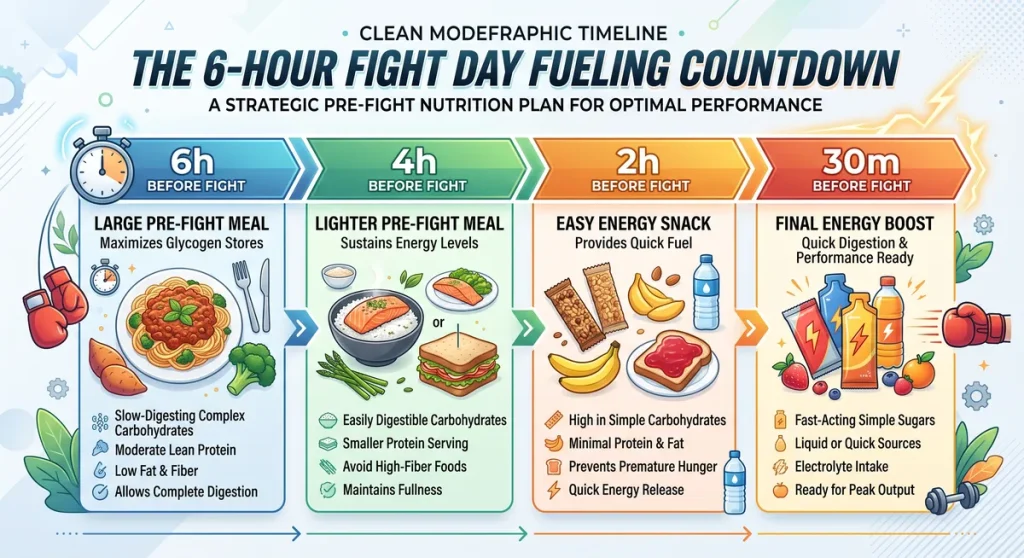
The reason for this sequence is that fighters do not run on a fixed clock. An undercard can easily shift your walkout by twenty minutes. If you are tied to solid food at the ninety minute mark you have no room to manoeuvre if the schedule picks up.
04. The Hydration and Sodium Balance: Staying Full Without Bloating
Your fluid strategy has to contend with the same sort of adrenaline issue as your food does. There is a difference between downing a lot of water in one go and taking measured sips. A large volume can just sit in an already taxed stomach instead of being put to use, whereas the steady intake over the course of the countdown will keep things moving in the gut without that sloshing, bloated sensation fighters talk about once they are under the lights.
Then there is sodium. Its value goes past mere hydration. In the hours leading up to the bout, getting enough of it is a matter of tactics; it holds fluid in the bloodstream and is what stands between a fighter and the cramping that can set in during a hard grappling session in the third round after fifteen minutes of non stop sweat.
For most who have put in the work to make weight with their water loading and sweat protocols, the body’s sodium and fluid reserves are running low. You close that gap before the first bell by making fight day sodium part of your rehydration plan from weigh in to walkout, not an afterthought on the morning of.
05. The Golden Rule of Fight Night: Don’t Put Anything New on the Canvas
Repetition, not improvisation, is how you win on fight night nutrition. The ones who look sharp walking out have been following this timeline for weeks. As for what goes in the mouth, every item should have a proven history from the toughest sparring Saturdays of camp. When the call for the walkout comes, nobody wants the variable of an untried electrolyte flavor or some gel from the hotel gift shop.
FIGHTER TAKEAWAY: If it has not been field tested in the hardest sessions at camp, do not have it backstage. No new gels, no new drinks.
FAQ Section
What is the right fuel for a fighter on the day of?
Lean protein with low fat and quick digesting carbs such as white rice, oats, honey or a banana. One keeps fat and fiber to a minimum all day so as not to compound the slow stomach emptying that adrenaline will bring on.
When is the time for the last substantial meal?
Three to four hours prior to the scheduled walkout. That gives the body room to clear the gauntlet of solid food while holding blood glucose levels even for the liquid and locker room snacks to come.
What can fighters consume in the locker room right before a bout?
A few sips of an electrolyte carb drink, a half banana or some rice cakes with honey will do. Simple sugars are easily absorbed and give you the energy you need without putting more stress on a gut that is already under the strain of hormones.
Why does a heavy meal leave a fighter sluggish?
Dense fats and fiber draw blood away from the muscles and into the stomach for digestion. That lethargy and the threat of cramping when taking shots to the midsection are not worth it.
And if the schedule changes and the fight is moved up?
The countdown is designed for that. By sticking to light snacks and liquid in the last two hours as opposed to a big solid meal, a fighter can handle the change without a full stomach in the way.
- Adrenaline and mental pressure have a way of slowing gastric emptying, so a meal that was fine in training can feel like lead on fight day.
- The structure of the countdown is there to provide some leeway if walkout times get shuffled: solids at the four hour mark, liquid carbs at two, and a simple sugar top off at thirty minutes.
- It is also why you must be sparing with fat and fiber on fight day; competition stress will only make them harder to process.
- Sodium is essential for offsetting the risk of cramps in the later rounds of a grueling exchange.
- Above all, nothing that makes it past the backstage area should be untested.

Author’s Note
Enjoyed this breakdown? Hit the subscribe button to get our latest documentary drops and fight camp analysis sent straight to your inbox before they go public.
Support Independent MediaAPEX STRIKE GEAR
Official Training & Equipment Partner of EOF. Elite gear for elite performance.
Explore Gear →