


Fighter Overtraining Guide: How to Put an End to Fight Camp Burnout
How to Manage Fight Camp Burnout: The Fighter’s Guide to Overtraining Recovery
To have one’s best work left on the gym mats with only three weeks to go before a bout is the kind of tragedy that plagues combat sports. There is an old school notion that every session is a matter of willpower. But putting maximal volume on an already spent body does not make for championship endurance; it degrades motor recruitment and timing, and reaction times suffer as a result.
This is not about making excuses to sit out. Properly managing overtraining means applying the same tactical discipline to the central nervous system as one would to a game plan. With the right diagnosis of fatigue and some targeted deloading, a fighter can ensure he is peaking in the cage and not during some Tuesday afternoon sparring.
01. Diagnosing the Burnout: Normal Fatigue vs. Nervous System Crash
Spotting the Non-Negotiable Red Flags
Any seasoned fighter knows the difference between local muscle soreness and true CNS exhaustion. Soreness is simply tissue breakdown that will mend with good food and rest. CNS fatigue is something else entirely: a systemic depletion in the body’s capacity to send electrical signals from the brain to the muscles.
When the nervous system gives way, you will notice it first in your reactive takedown defense or the lack of a sharp snap on the lead hand. The opening is there, but the body is a half-beat behind in the execution.
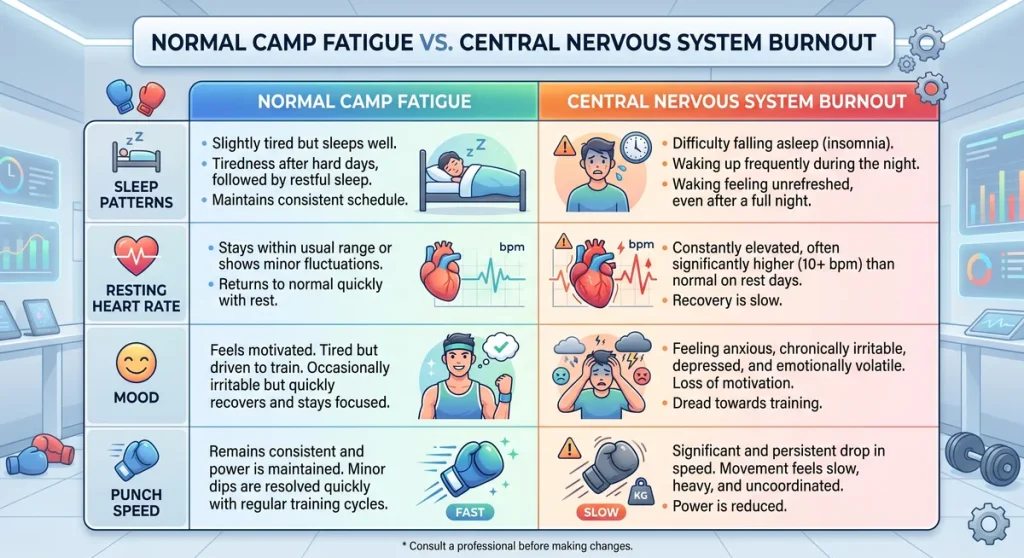
Then there is the matter of the insomnia paradox. A fighter may be physically wrecked by the afternoon and yet be staring at the ceiling at 2:00 AM with his pulse racing. The sympathetic side of the autonomic nervous system has gone into overdrive, putting the body in a perpetual fight-or-flight mode that makes for no deep sleep.
WATCH OUT: Should you find yourself in this state, do not try to grind through another hard sparring round. The risk of a knockout or soft-tissue damage is far too high when the system is locked in emergency mode.
| Metric | Normal Camp Fatigue | Central Nervous System Burnout |
| Sleep Quality | Easy to fall asleep, restorative | Fragmented, 2:00 AM insomnia, night sweats |
| Morning Resting Heart Rate | Baseline (+/- 2 bpm) | Running 5 to 8 beats above normal |
| Strike Velocity and Snap | Consistent after warm-up | Muffled, with delayed counter timing |
| Psychological State | Motivated even if sore | Irritable, apathetic, dreading the drills |
02. The High-Volume Trap: Why Hard Sparring Sabotages Recovery
Your Weekly Combat Energy Budget
You need full-contact to get comfortable in the pocket and work on distance, but it is the most taxing thing you put on your neural reserves. As fatigue accumulates, the neck and traps weaken, leaving a fighter more open to head trauma and concussions.
The American College of Sports Medicine (ACSM) is clear on the need to periodize high-impact loads so as to avoid non-functional overreaching. In our line of work, that requires separating hard contact from technical skill work.
Once systemic fatigue is evident, a coach should have the sense to call off the full-contact exchanges in favor of technical flow or wall-control positioning. Putting high-intensity interval work on top of a heavy sparring day is a recipe for an energy deficit. Stick to a fight camp conditioning protocol that puts the aerobic base in before any redline scrambles.
03. The Emergency 48-Hour Reset: Tactical Deloading Without Guilt
What to Do When Your Body Hits the Wall
There is no virtue in pushing past the red flags mid-camp. A micro-deload of 48 hours is a calculated move. It gives the endocrine and nervous systems a chance to recalibrate and will not cost you an ounce of your cardio. Think of a productive deload as an active undertaking rather than two days to be had on the couch. It is about stimulating blood flow, putting the nervous system at ease, and ridding the body of cellular debris.
Here is how to approach it:
- Halve the Total Volume: Keep your velocity and technique in check, but reduce your rounds and reps by 50 percent.
- Down-Regulate to Parasympathetic: Follow any light session with 15 minutes of mobility work and some focused nasal breathing.
- Put Glycogen Back in the Tank: Chronic fatigue is often exacerbated by not enough carbohydrates. Make a slight increase in complex carbs to top off the glycogen in your liver and muscle prior to embarking on your MMA weight cutting safety protocols.
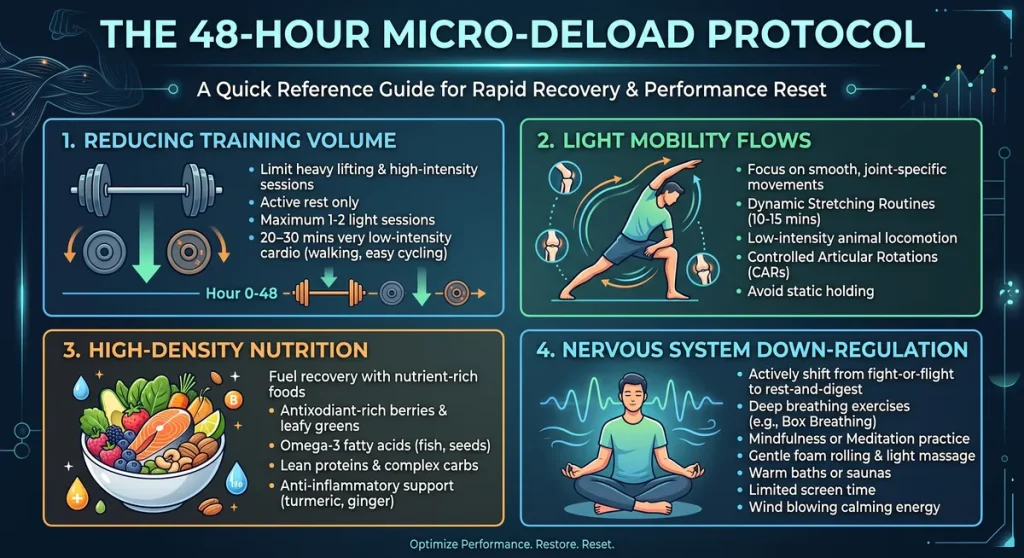
The National Strength and Conditioning Association (NSCA) has put out research showing that a well-structured deload window promotes supercompensation, so when you are back to full training you can put out more force.
FIGHTER TAKEAWAY: A 48-hour deload done with purpose will not set back your conditioning. On the contrary, it flushes out the deep hormonal and neurological wear and tear from weeks of hard work so you are sharp and explosive come fight week.
04. Simple Daily Readiness Tracking: Low-Tech Monitoring
Gauging Where You Are Before You Hit the Mat
Gauging where you are before you hit the mat does not require a pricey sports science lab. There are two low-tech ways to get an instant read on your recovery:
- The Morning Pulse Check: While you are still flat in bed, measure your resting heart rate right after you open your eyes. If you see a 5 to 7 beat jump over your camp average, it means your autonomic nervous system has yet to make up for yesterday’s efforts.
- The Crush Grip Test or Hand Dynamometer: Your grip is a direct line to central nervous system output. An unexplained 10 to 15 percent decline in strength is a sure sign of neuromuscular fatigue.
Data from the UFC Performance Institute makes the case for monitoring HRV and daily neuromuscular output so corners can make the necessary micro-adjustments and stave off injury. Pair these baseline checks with a sound fight day warm up routine and you will be primed for high-velocity work.
Conclusion
You do not prove your mettle by grinding through acute burnout; you just leave your speed and resistance in the training room. The fighter who walks into the cage on fight night with an engine that is fully restored and explosive is the one who wins championships.
Apply the same discipline to your recovery as you do your grappling and striking. When you step off the scale on the morning of weigh-in, let your preparation flow into a fighter rehydration protocol without missing a beat so you are durable and refreshed for the cage.
FAQ Section
What should I look for as signs of overtraining in camp?
If you are irritable, losing the snap in your punch, or have insomnia despite being worn out, those are key indicators. A drop in grip strength or a spike in your morning resting pulse are also tell-tale.
How long to recover from burnout?
Some mild overreaching can be put right in three to five days with less volume and active recovery. But if you are dealing with a severe syndrome that has compromised the endocrine and nervous systems, it could be weeks or months before things are mended.
Are complete rest days warranted?
Absolutely. One or two a week to let the CNS reset and take the stress off your joints is wise.
Does pushing through exhaustion build character?
Not really. Forcing yourself to spar at high intensity when the CNS is fatigued only slows your reactions, creates bad defensive habits, and opens you up to soft-tissue tears and concussions.
- Do not confuse sore muscles with CNS burnout: Tissue needs time to heal, but 2:00 AM wake-ups and a loss of reaction time point to something deeper in the nervous system.
- Sparring is a budget: Hard contact on an exhausted system puts your neck stabilizers and concussion risk in jeopardy.
- Let the deloads bring the speed back: A 48-hour cut in volume will clear the fatigue without sacrificing your cardio base.
- Stay on top of the basics: A quick look at your grip and morning heart rate will show you if you are overtraining before it becomes an injury or a poor showing on fight night.

Author’s Note
Enjoyed this breakdown? Hit the subscribe button to get our latest documentary drops and fight camp analysis sent straight to your inbox before they go public.
Support Independent MediaAPEX STRIKE GEAR
Official Training & Equipment Partner of EOF. Elite gear for elite performance.
Explore Gear →