

Championship Strategy: Pacing for the 5-Round Fight
How to Pace Yourself in 5-Round Fights: The Championship Blueprint
Put on the gloves and you may think a five rounder is simply an extended three rounder. In truth it is a different sport. When you are looking at 25 minutes of work instead of 15, the way a fighter must allocate his energy is altered completely. Ignore that fact and a fighter can seem invincible for a while before he is entirely empty by the fourth round.
01. Adrenaline and the 25-Minute Reality
There is an adrenaline trap in the opening minute of a five rounder that can make even seasoned veterans feel like the contest will be over in 15. The problem with that early surge is it consumes fast-acting muscle fuel well before you are into round three. What you see in the post-fight recap is often a fighter left hollowed out for the two title-deciding rounds that follow.
The numbers bear this out. GC Performance Training has published studies on combat sports work-to-rest ratios which indicate MMA is an intermittent, highly anaerobic affair; some 77 per cent of finishes are the result of high intensity bursts of no more than 8 or 12 seconds. Overcommitting early doesn’t tell on you right away but you will feel it two rounds down the line when there is nothing left in the tank.
WATCH OUT: There is a heavy price for chasing a knockout in round one of a five. Should your opponent ride out the storm, you are heading into round two with dead arms and have 20 minutes still to go. A fighter with a granite chin or good defense will leave the aggressor with no answers once the championship rounds are upon him.
02. Stealing Rest in the Cage
You will notice elite competitors do not just endure the 25 minutes, they find ways to rest within them without appearing to be passive. A neutral frame or a long jab can provide a 5 to 10 second lull where the heart rate eases yet defensive coverage is never compromised.
FIGHTER TAKEAWAY: Think of the micro-break as a reset. It is not about retreating but using those few seconds behind a jab to catch your breath while keeping full awareness.
Against the fence or during a grapple these are the moments to be had. You can hold your ground or manage hip position with less cost than trading in open space. And under the ABC’s Unified Rules of MMA, judges will score effective striking and grappling first before considering area control as a tiebreaker, as their official judging criteria makes clear. So a properly executed micro-break won’t lose you points on the card. It is a skill to be honed; those who cannot modulate their tempo without putting their hands down or backing into the fence are the ones who end up vulnerable to a counter or takedown.
03. Grappling Fatigue and Striking
One of the most frequent errors is to view grappling and striking as equal in terms of what they take from you. They are not. An isometric wrestling hold or some sustained wall grinding puts a constant strain on the muscles and depletes glycogen at a much higher rate than the stop-start nature of striking at range. An analysis in the Sports Innovation Journal puts the work-to-rest ratio for MMA at about 1:2 to 1:4. The numbers bear out the difference between a grappling sport’s sustained output and the striking-heavy exchanges of an MMA bout, which are more likely to run 6 to 14 seconds. Put it in practical terms: a fighter who is put up against the cage to ward off a single leg is expending energy in a way that one circling and throwing a jab from range is not.
There is no point in constant aggression if it means having nothing left for the counter or a clean shot on a hurt man. A rhythm jab to hold your ground is a fraction of the cost of a full power combination. Those who grasp the distinction can see a fighter through five rounds as opposed to two.
04. Tactical Round Management: Scripting the Championship Rounds
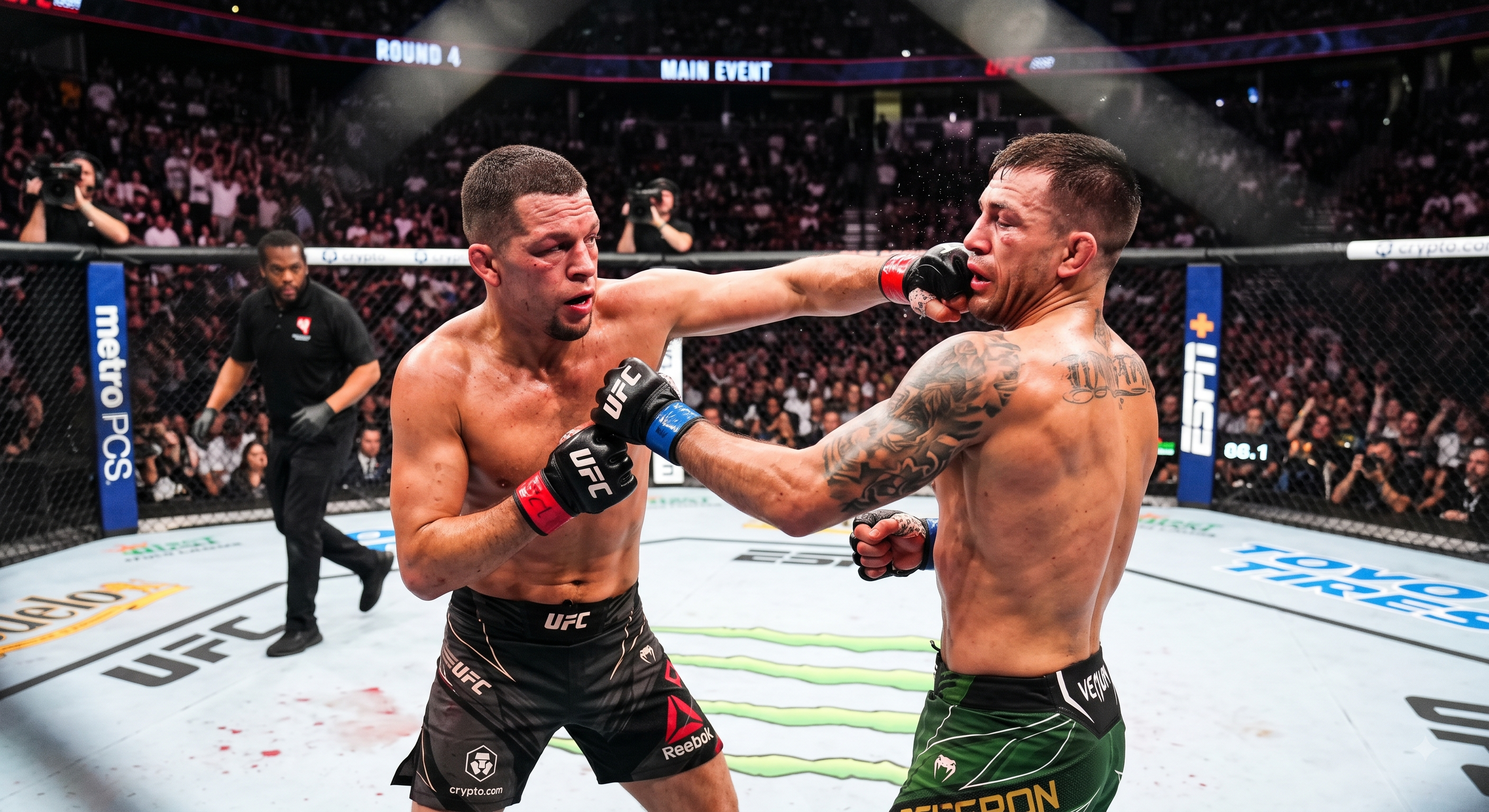
It is of no use to have banked points in the first two rounds if there is no defense to be had by the fourth. The metrics tell you that the so-called championship rounds of four and five are unique to title fights and main events; they put a strain on mental fortitude and deep water cardio that the standard three round card does not.
That is where corner communication is vital. A good corner will spot the heavy breathing, the hands dropping, the slower feet, and offer a specific tactical correction. A fighter running on fumes requires instruction, not empty motivation.
The mental adjustment is as important as the physical. One has to make peace with discomfort in the deep waters of a fight. To disengage entirely late in a five rounder is to cede a close contest to an opponent on the strength of ring generalship alone.
Pacing in 5-Round Fights Comes Down to Discipline
Success over 25 minutes is a matter of restraint, not just conditioning. The better fighters view every exchange as a decision to be made, employing micro-breaks and efficient positioning so they still have something to put on the table when the championship rounds come around.
FAQ
How many total minutes is a 5 round MMA fight?
Five rounds of five minutes each makes for 25 minutes of competition, with a minute to rest in between. You will only see this format in title bouts and select main events.
How do fighters avoid gassing out in 25 minute fights?
By being selective with their explosive bursts and reserving them for high value opportunities. They will control the center of the cage and take a 5 to 10 second breather in the clinch, all while keeping the effective aggressiveness the judges look for.
Why are the fourth and fifth rounds called championship rounds?
Because they are reserved for the big shows and test a fighter in ways a 15 minute fight does not. Too often you will see a fighter who was dominant for the first three rounds go to pieces once he is in unfamiliar physical territory.
Should a fighter change their style for a 5 round fight compared to a 3 round fight?
They should. In a three rounder an athlete can keep a higher tempo without much penalty. For five rounds you have to be measured with your feints and grappling pressure and not put maximum power behind every strike.
- A five rounder calls for different tactics than a three. Spend too much adrenaline early on and the fighter is done by round three or four.
- Use a long jab or neutral frame for a micro-break to let the heart rate come down; under the Unified Rules it is an easy way to recover without giving up scoring position.
- You will burn through energy quicker in a wall wrestling situation than at open distance, so output has to be budgeted accordingly.
- Rounds four and five are a true test of deep water cardio and mental toughness.
- And in the intervals between those rounds, a corner that gives specific direction rather than broad encouragement will have a hand in how a fighter performs when it matters most.

Author’s Note
Enjoyed this breakdown? Hit the subscribe button to get our latest documentary drops and fight camp analysis sent straight to your inbox before they go public.
Support Independent MediaAPEX STRIKE GEAR
Official Training & Equipment Partner of EOF. Elite gear for elite performance.
Explore Gear →