

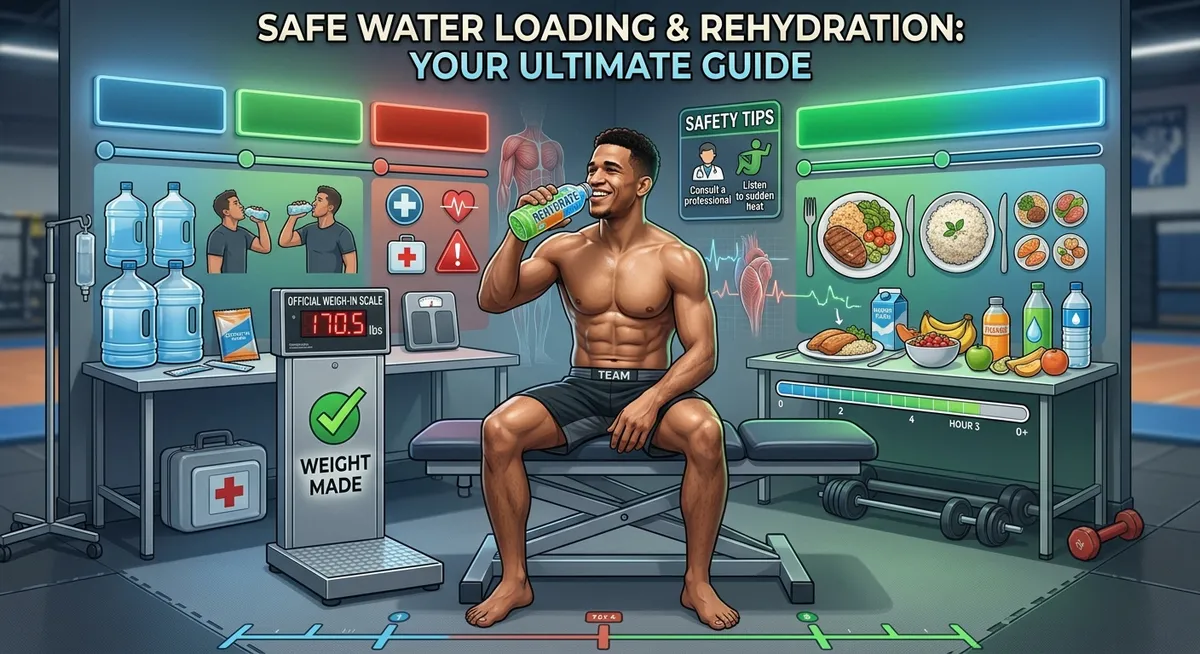
MMA Weight Cutting Safety Guide: How to Cut Water Safely
MMA Weight Cutting Safety Guide: How to Cut Water Without Breaking Your Body
There is no more perilous round in an MMA bout than the one fought in a hotel bathroom before the cage door is even shut. Yet making weight should never mean you have to put your life at risk or leave your chin in the sauna. Here is a look at the hard rules for a safe water cut, knowing when you have gone from working hard to needing medical attention, and the right way to rehydrate for the performance that matters.
01. The Hard Numbers: The 10 Percent Safety Ceiling
The scale should not be the master of your camp. Too many amateur camps make the mistake of equating a weight cut with fat loss. They are not the same. Shedding body fat over an eight week period is a sustainable, slow affair. Stripping off water in the last few days of fight week is an aggressive manipulation of fluid balance with its own set of risks.
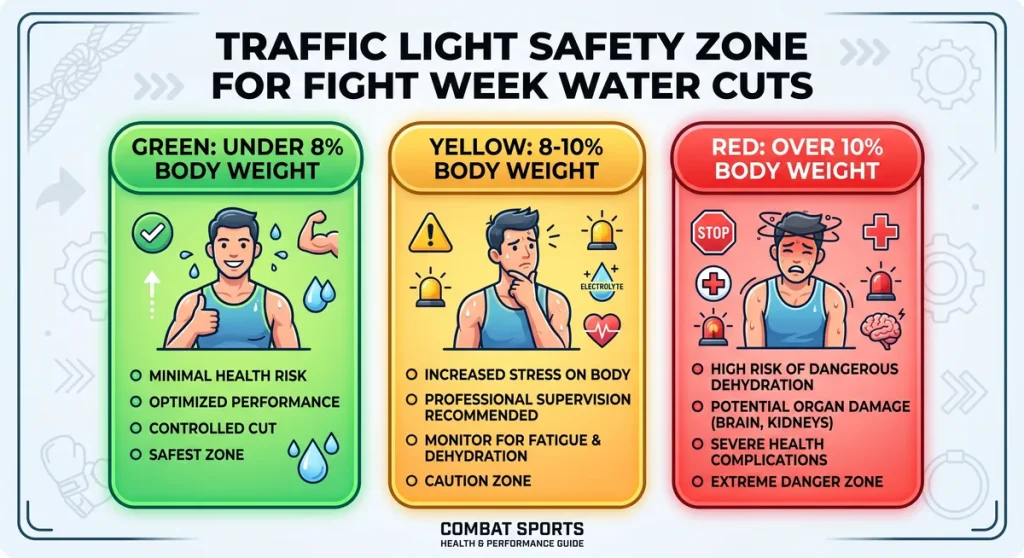
The California State Athletic Commission understands the difference and has built its regulations on it. CSAC will track any fighter who puts back on 15 percent or more between the weigh-in and the bell as evidence of dangerous rehydration. That was the case with seven fighters at UFC 298 this past February, one of whom had a 30 pound swing in less than a day. Most camps now work backward from that kind of regulatory scrutiny and consider 8 to 10 percent of total body weight the ceiling for an acute cut. Anything more is a gamble with renal function to hit an arbitrary figure.
And let us be clear: if a fighter’s natural walking weight is 20 pounds over the contract limit, a harder sweat session is not the answer. That is not a matter of discipline; it is the wrong problem to be solving. The fix is a change of weight class, not some extreme protocol born of wishful thinking.
02. Red Flags: When to Abort
You can expect a fighter to feel wretched in the final sweat of the week. But there is a line between that and a medical emergency, marked by physiological signs that generic advice tends to overlook.
Take anhidrosis. If a fighter is in a hot bath or sauna and has completely stopped sweating, the body has used up its fluid reserves for cooling. The CDC notes that once the sweat process fails, you are looking at heat stroke and temperatures of 106 degrees or more in as little as 10 minutes. Left untreated, that is a path to permanent disability or worse.
Then there are the neurological warnings. Slurred speech, tunnel vision and a lack of motor control tell you the brain is being compromised by the fluid loss. A fighter in the sauna who has lost his situational awareness cannot be relied upon to see the danger. It is the coach in the room who has to call time on the cut, not the one chasing a number.
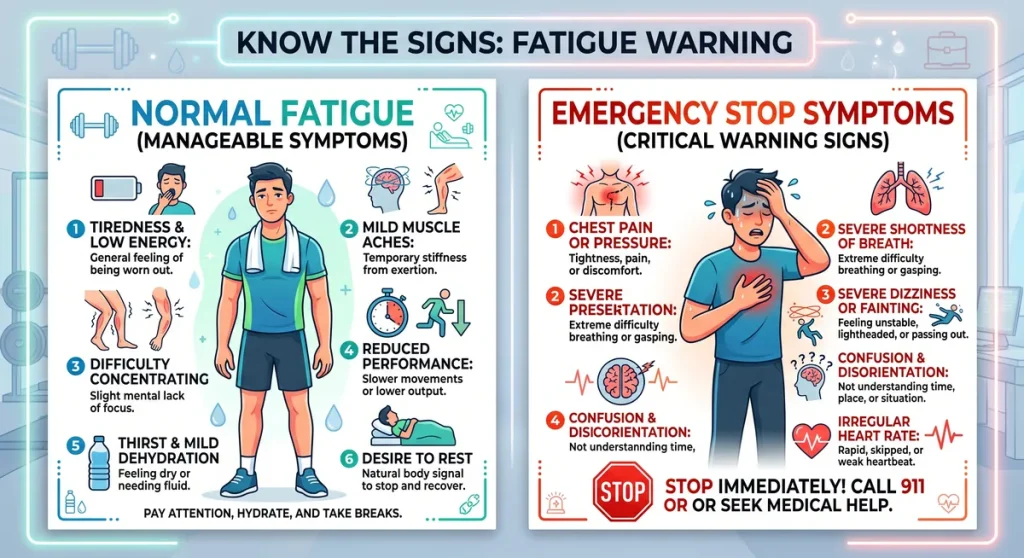
Call it quits immediately if you see any of these:
- Sweating ceases while still in the heat
- Disorientation or slurred speech
- Vomiting
- Uncontrollable cramping
- Blurred vision
WATCH OUT: Anhidrosis is a hard stop. If the sweat dries up in the sauna, the cut is done. Pushing on from there is a direct route to acute kidney failure and heat stroke.
03. Safer Sweat Protocols
How you handle the heat environment will determine if a fighter is simply depleted or in actual danger when the final pounds come off. We recommend capping sessions at 15 or 20 minutes with cool down breaks in between. This allows for a controlled rise in core temperature rather than an unmonitored spike. There is a cardiovascular ease to a hot Epsom salt bath that a dry sauna simply cannot match. In the latter, one is on one’s feet in substandard air for long stretches; in the former, the fighter is at rest. That said, do not mistake the bath for a shortcut to weight loss. The magnesium sulfate does nothing for the scale; it is all down to how long and hard one sweats. The value of the bath is in the comfort it affords and the ability to monitor the process.
Then there are certain practices steeped in tradition that have no business in a modern cut. Wearing a rubber or plastic suit in the sauna is one such example. It traps heat against the skin and denies the body the evaporative cooling from sweat, hastening the slide into heat stroke with little warning. Over the counter diuretics are equally out of place; they put the kidneys under duress and invite electrolyte collapse apart from any water you are trying to shed. A prudent fighter will leave them both behind.
04. Protecting Your Chin: The Brain and Body Connection
Restoring Cerebrospinal Fluid Before You Enter the Cage
The fluid that cushions the brain from the skull is slow to come back. A fighter may be refueled and feel as though his energy has returned, but an aggressive cut can leave that protective layer depleted.
How one spends the first two hours after the scale determines what comes next. The right protocol is to take small sips of a rehydration solution with sodium and potassium, then some simple glucose to get the fluid into the cells and not just sitting in the stomach. Plain water will not do the trick; without the sodium to hold it in the tissue, most of it will pass through you.
FIGHTER TAKEAWAY: Do not be fooled by how you feel. Rehydrating the muscles is a quick matter; the brain takes much longer. If you have put your cerebrospinal fluid in deficit by cutting more than 10 percent of your body weight, you are at far greater risk of being put out on fight night.
Making Weight Is Not the Same as Winning
A true professional knows the difference between being light enough for the number and healthy enough to compete. There is no point to a championship belt if you have compromised your kidneys or left your brain exposed in the pursuit of it. Safety in MMA is about respecting real limits and your rehydration plan with the same gravity as the cut itself.
Frequently Asked Questions
What is the safest amount to put off?
In an acute water cut during fight week, 8 to 10 percent of total body weight is the ceiling. Go beyond 10 and you are looking at a marked increase in the chance of renal failure, heat stroke or diminished shock absorption for the brain.
What should I be watching for?
If you stop sweating in the heat, or if you are vomiting, cramping uncontrollably or your speech is slurred, those are red flags. Blurred vision and severe confusion are also cause for immediate medical attention.
Why does excessive water loss make one easier to put down?
Dehydration thins the cerebrospinal fluid. When a dehydrated fighter takes a shot to the head, there is less to absorb the impact and the brain meets the skull wall with considerably more force.
When does rehydration begin?
It should be underway within minutes of leaving the scale. Stick to small, frequent sips of an electrolyte and carb mix. Gulping pure water will only upset the stomach and will not restore cellular balance.
- Treating a fight week cut as if it were part of camp dieting is where you start making dangerous calls; the risk timelines for fat and water loss are not the same.
- Most camps now respect an 8 to 10 percent ceiling for acute water cuts, mindful of the regulatory environment set by bodies like the CSAC which flagged seven fighters at UFC 298 last year for exceeding their 15 percent regain threshold.
- Anhidrosis or neurological issues like slurred speech are unmistakable signs of a medical emergency, not something to push through.
- And while a fighter might feel fine on fight night, an aggressive cut can leave him with an elevated knockout risk because the cerebrospinal fluid has not had time to replenish. As for rubber suits and diuretics, they remove the very warning signs a fighter needs to remain safe and have no place in today’s game.

Author’s Note
Enjoyed this breakdown? Hit the subscribe button to get our latest documentary drops and fight camp analysis sent straight to your inbox before they go public.
Support Independent MediaAPEX STRIKE GEAR
Official Training & Equipment Partner of EOF. Elite gear for elite performance.
Explore Gear →