

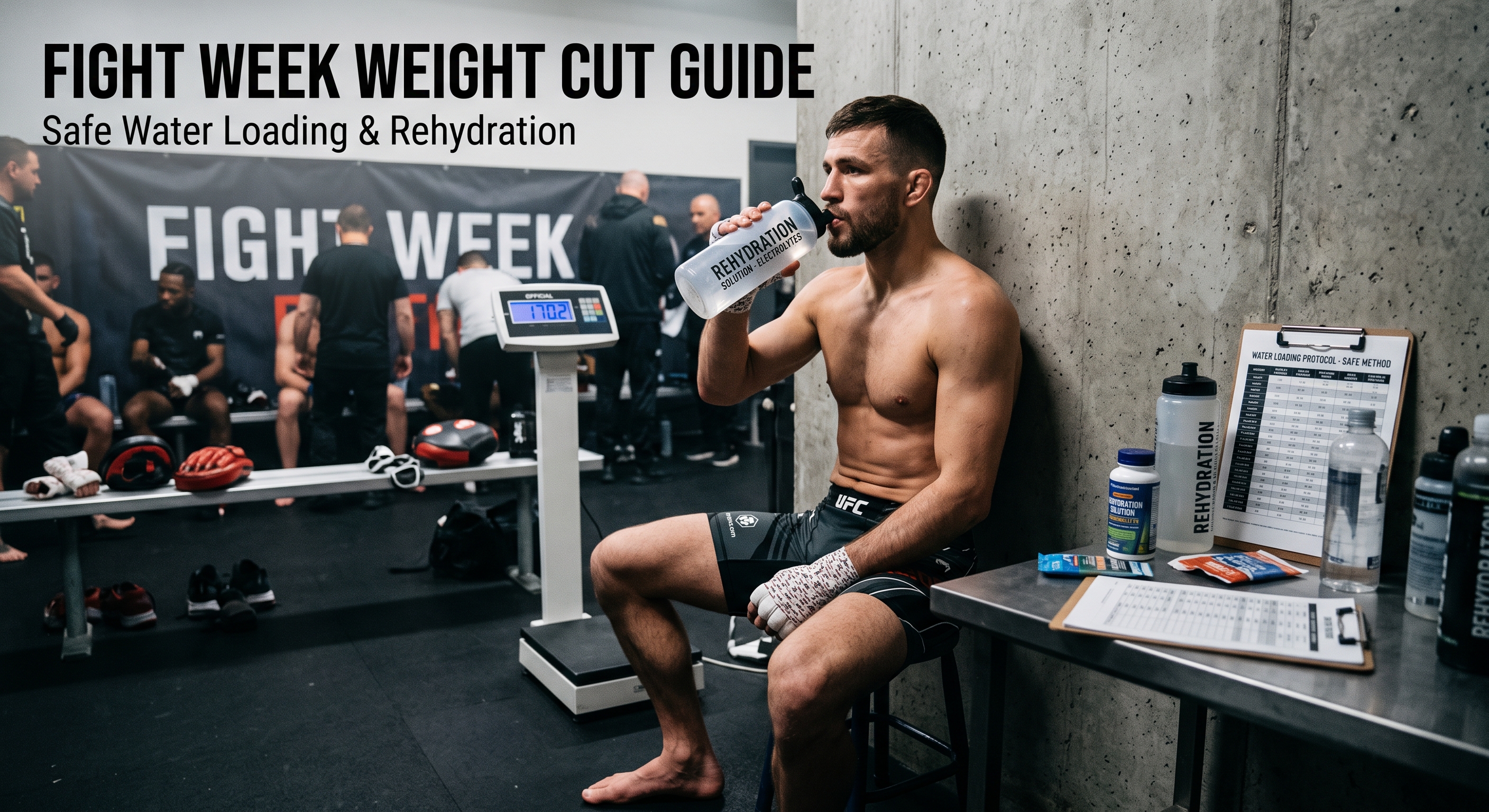
Fight Week Weight Cut Guide: Safe Water Loading & Rehydration
The Ultimate Fight Week Weight Cut Guide: From Water Loading to Fight Night
There is a fight to be had before the one in the ring. You will find a fighter in a hotel bathroom at 4:00 AM on weigh-in morning, sitting in a hot tub and letting the scale tick over to a figure put there by calculation weeks ago, not an overnight guess. It is an exact physiological exercise in fluid balance, not some test of willpower. What follows is how the protocol is meant to be done, from Monday’s first gallon of water to the last electrolyte drink before the walkout.
01. Water Loading (Monday to Wednesday)
The idea is to flush the system on a schedule. By putting 1.5 to 2 gallons of water down daily at the start of the week, a fighter puts the kidneys in a rhythm they can’t just turn off. The high volume of water downregulates aldosterone, which would otherwise have the kidneys holding onto sodium and fluid. When you pull back hard on Thursday, the kidneys continue to excrete at a higher rate because that signal has been dampened.
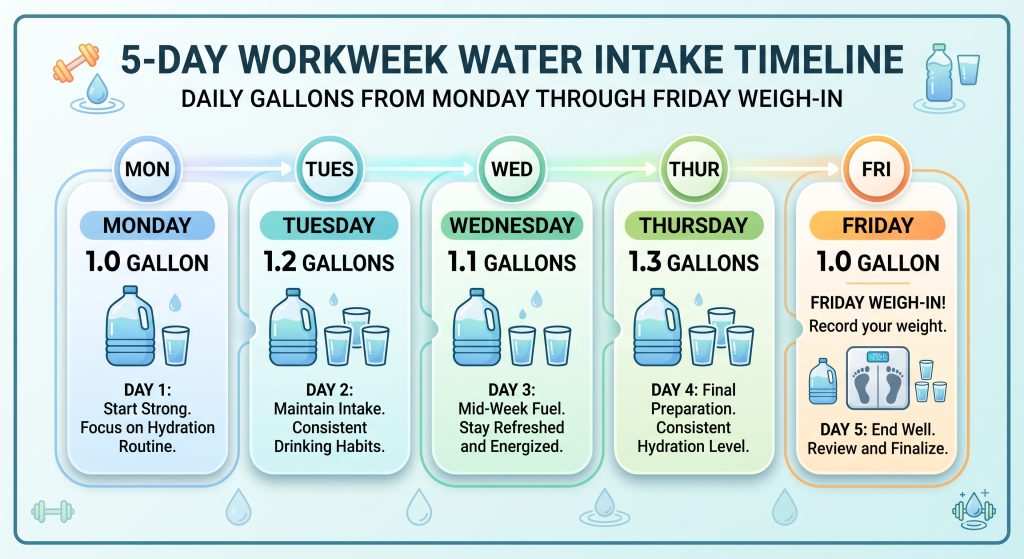
This is the difference between a scramble and a well-run cut. Three days of training the kidneys to let go of water makes for a quicker drop when you restrict intake than if you try to do it all cold on the last day. Let the mechanism do the work so the sauna does not have to.
Then there is the carb taper. Since every gram of glycogen in the muscle is bound to three or four grams of water, cutting carbs lets that water go. But do it gradually; an abrupt fast robs a fighter of the energy still required for camp. Most write-ups miss the timing issue: if you are water loading on Monday but don’t touch the carbs until Wednesday evening, you are working against yourself and will be chasing those extra pounds on Thursday night.
02. The Last Push: Thursday into Friday
When it comes to the final 5 or 8 pounds, you need direct heat and the right method. We are talking about 15 to 20 minute intervals with breaks, not a marathon in the sauna that puts core temperature in jeopardy without anyone watching.
A hot Epsom salt bath is kinder to the cardiovascular system than a dry sauna. There is no standing around in poor air quality and the magnesium sulfate in the salts gives a little osmotic pull to surface fluid. That said, the weight loss is coming from the sweat and the heat, not the salt.
Once the sweating is done, it is a matter of discipline. No food, very little liquid and a quiet room. Panic in the final hours can make a tough number on the scale much worse.
WATCH OUT: Do not think you can speed up the process by staying in the hot bath for another 20 minutes to nudge out a pound or two. All you are doing is risking your core temperature and making a clean rehydration harder later on.
03. Post-Weigh-In: The 24 to 36 Hour Window
Hitting the target on the scale is hardly the end of it. In fact, what happens in the next 24 to 36 hours is what will dictate how you perform on fight night. Hydrate first, eat second.
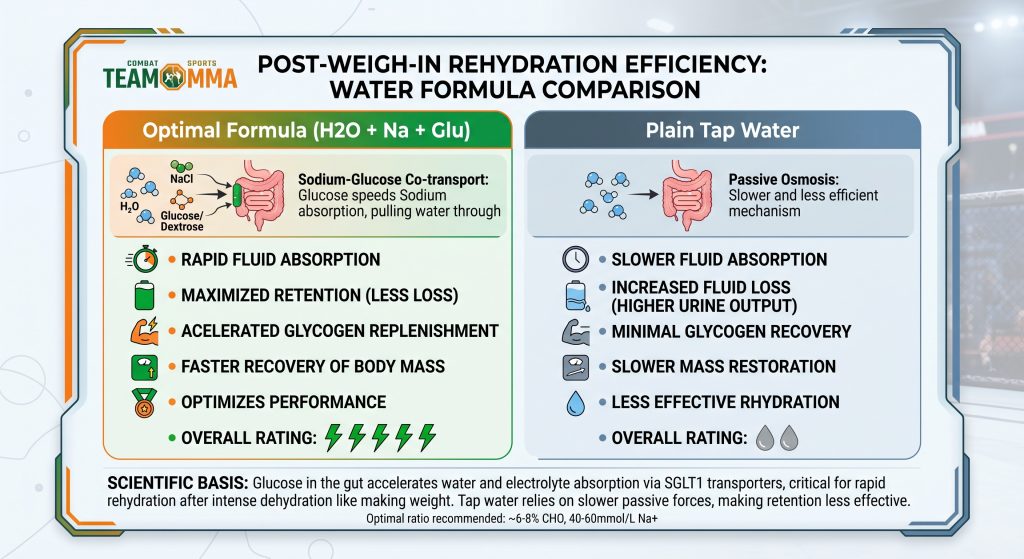
You cannot put cellular fluid back in place with plain water. Without sodium to keep it in the tissue and blood, it will run right through you. And in the extreme, chugging large amounts of plain water after a hard cut can lead to hyponatremia, a dangerous fall in blood sodium that brings on nausea and swelling. Proper rehydration is not about chugging plain water the moment one is off the scale; it is a solution of sodium, potassium and simple glucose that must be sipped in small, frequent amounts.
Here is how to go about it:
- Within 30 minutes of leaving the scale, begin with an oral rehydration solution for the sodium and potassium.
- Follow that with some simple glucose or a sports drink to encourage the fluid to be absorbed by the cells as opposed to pooling in the stomach.
- Do not put any food on the table until the stomach has been given time to settle; when you do, stick to easily digested carbs such as white rice, fruit puree or sweet potatoes.
- Let heavy proteins and fats wait until digestion is back to normal, as they will impede gastric emptying when fluid needs to be moving.
FIGHTER TAKEAWAY: At the amateur level, it is all too common to see a fighter put down gallons of water right after the weigh-in. It is a mistake. Devoid of electrolytes, the water does nothing but sit in the stomach and cause bloating, cramping and nausea at a time when recovery is paramount.
04. The Danger Zone: Where Weight Cuts Destroy Fight Performance
Chin Durability, Brain Fluid, and Third-Round Cardio
There is more to extreme cuts than just fatigue. Cerebrospinal fluid is what stands between the brain and the skull, and severe dehydration thins that buffer. A dehydrated fighter who absorbs a hard blow is subject to greater rotational trauma, which goes some way to explaining the link between these weight cuts and knockout vulnerability.
The California State Athletic Commission is on top of this. They track weight regain directly. Take UFC 298 in February 2024, where CSAC put seven fighters on notice for putting back on 15 percent or more of their body weight from weigh-in to fight day, one case saw a 30-pound swing in less than a day. That is the line the commission draws for potentially dangerous practices. Most camps now have a safer ceiling in mind, keeping the acute water cut to under 8 or 10 percent of total body weight.
Then there is the matter of the third round. Electrolyte depletion is the culprit behind early burnout and muscle cramps. Sodium and potassium are essential for nerve signaling and contraction. A fighter who has only replaced those minerals with plain water may look full on the scale but is no better than an uncharged battery when he walks into the cage.
Making Weight Is Only Half the Fight
What the number says on Friday afternoon tells you nothing of Saturday night’s performance. A sound approach to the week’s weight cut views water loading, the final sweat and rehydration as a single system, not three disparate issues. Given how fast extreme dehydration can become a health emergency, medical oversight should be part of the plan for any coach or fighter.
Frequently Asked Questions
How much do fighters normally cut?
In the professional ranks, it is usually in the region of 5 to 10 percent in pure water over the course of fight week. Go beyond 10 percent and you are looking at organ stress and a higher risk of being put out of the fight, hence why commissions like CSAC monitor excessive regain.
What is water loading?
It is a practice in boxing and MMA where an athlete will put down 1.5 to 2 gallons of water a day early in the week. The aim is to downregulate aldosterone so the body is primed to excrete fluid. Then when intake is cut back on Thursday, the body keeps flushing for hours.
What is the protocol post-weigh-in?
Small sips of a rehydration mix with sodium and simple carbohydrates. No large volumes of plain water and no solid food until the stomach is settled and fluid balance is in order.
Why is a poor cut a liability?
Without the cushion of cerebrospinal fluid, a heavy strike translates to more direct trauma for the brain, raising the odds of a concussion.
How is it policed?
If a fighter regains 15 percent or more of his weight before the bout, the CSAC will flag it as an unsafe rehydration practice. We saw them do that with seven men at UFC 298 in 2024.
- Water loading is effective because it manipulates aldosterone early on, meaning the kidneys keep working even when you restrict intake and the sauna is not doing all the heavy lifting.
- There is a point of diminishing returns with heat exposure; capping sessions at 15 to 20 minutes is better for the cardiovascular system than trying to force out a pound and risking your core temperature.
- The first 24 hours after the weigh-in are what will define the fight, and it begins with glucose and sodium.
- Most camps are wise enough to respect the 8 to 10 percent limit on water cuts in light of the danger they pose. And with the CSAC’s 15 percent threshold, commissions are making sure the gap between a legal and a safe weigh-in is closed.

Author’s Note
Enjoyed this breakdown? Hit the subscribe button to get our latest documentary drops and fight camp analysis sent straight to your inbox before they go public.
Support Independent MediaAPEX STRIKE GEAR
Official Training & Equipment Partner of EOF. Elite gear for elite performance.
Explore Gear →