


Active Recovery for Fighters: Speed Up Healing Between Rounds
Active Recovery for Fighters: How to Train Harder by Healing Faster
You will not find many fighters who have made a day of it on the couch waking up any looser; they are usually stiffer for it. The body requires circulation to put right what a tough sparring session has done, and being completely still does little to hasten that. Active recovery is the answer, and it is not a workout in all but name.
01. The Rest Day Paradox
There is a reason inaction can be counterproductive. After heavy grappling, muscle tissue is rife with inflammatory fluid and metabolic byproducts. If you are immobile, there is no pumping action to move the blood and lymph back through the system and that waste stays put.
A bit of gentle movement alters the dynamic. Studies on lactate clearance indicate that active recovery will clear out accumulated blood lactate at a far better rate than passive rest, with results that are clearly tied to the level of intensity. Put down the remote and take a walk and you will find your hips and shoulders are not as tight the next day after having taken the brunt of some underhook battles.
Of course, one must be careful. Do too much and you are compounding fatigue; do too little and the tissue does not clear. Most fighters miss the mark in one direction or the other.
02. Don’t Cross the Intensity Ceiling
In the gym it is easy to make the mistake of thinking a recovery day is just a milder form of conditioning. An extra round on the bag or some hill sprints at 70 per cent are still training stress in the eyes of the body.
The solution is to set a firm limit on the heart rate. For most combat athletes that means holding to a conversational Zone 2, under 120 bpm. That is enough to engage the aerobic system without depleting the central nervous system resources a hard round has already used.
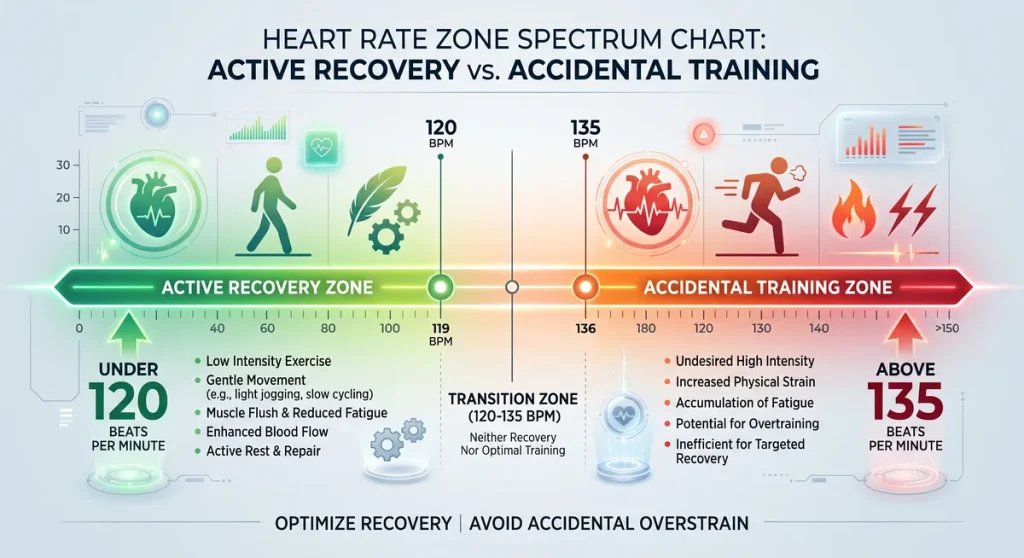
| Recovery Type | Heart Rate | Effect |
| Active Recovery Zone | < 120 bpm | Parasympathetic reset |
| Accidental Training Zone | > 135 bpm | Sympathetic stress |
WATCH OUT: if you are left breathing hard or drenched in sweat, you are not recovering. You are simply overloading the nervous system with yet another session. Keep it conversational.
03. Mobility for the Mat
A standard stretch routine from the gym will not address the particular tightness that comes with the sport. The thoracic spine gets rounded from a boxing guard; the hip flexors shorten and lose extension from hours in a wrestling stance.
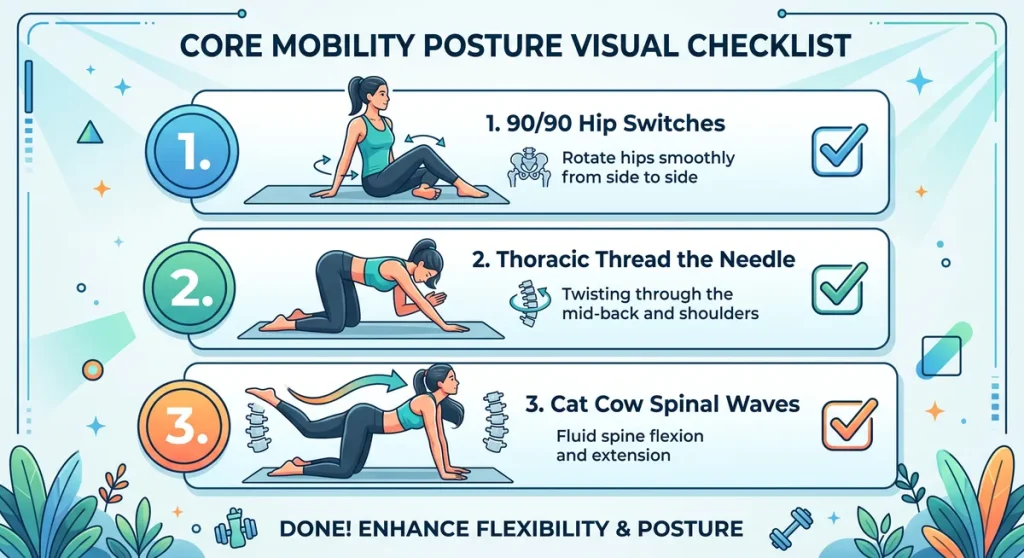
These three flows are designed to fix that pattern:
- 90/90 hip switches to put back the internal and external rotation needed for a double leg entry.
- Thoracic thread the needle to open up the upper back after a long period of tucking your guard.
- Cat cow waves to put some gentle flexion and extension into the spine to offset the static posture of clinch work.
Neglecting this is more than an issue of comfort. If the hip cannot extend, there is no rotational force to drive a takedown or power a rear leg calf kick.
04. Downshifting the Nervous System via Breathwork and Blood Flow
The body can remain in a sympathetic, fight or flight mode long after hard sparring has concluded. One will often find lingering tension in the jaw and shoulders, or a disruption in heart rate variability, hours after leaving the gym; these are telltale signs the nervous system has not yet downshifted.
There is no more direct way to make that shift than with some nasal breathing on a light walk. The nose does the work of slowing the respiration rate and putting the vagus nerve to use, moving the body from sympathetic drive into the parasympathetic state where tissue repair is possible.
FIGHTER TAKEAWAY: Make active recovery about your nervous system. The morning following a tough sparring session, put in twenty minutes of a walk with nasal breathing and some light spinal mobility. It is an effective way to halve the soreness.
05. A Blueprint for Weekly Recovery
An effective week is structured so that one or two active recovery sessions follow the most demanding wrestling or sparring days, not tacked on as an afterthought when time permits. You might have a hard grappling day Monday, take it easy with active recovery Tuesday, and be back at conditioning or technical work by Wednesday.
That said, complete rest is sometimes called for. An acute illness, a deep crash of the central nervous system or the taper of fight week all require stillness, not movement for its own sake. But for the usual weekly soreness, light activity is superior to sitting around.
Do not let this obscure the need to address genuine overtraining. If there is persistent fatigue, mood issues or an elevated resting heart rate over several days, a closer examination of the training load is in order.
FAQ
What constitutes the best active recovery for a fighter?
Something low intensity like an incline walk for thirty minutes, easy swimming or light cycling along with some joint mobility. The idea is to get the blood flowing without pushing the heart rate past a conversational Zone 2.
How should combat athletes plan their recovery?
Most do well with a couple of dedicated sessions a week, and they should be scheduled right after the heaviest sparring or wrestling, not on a random day with no connection to the training load.
Is shadowboxing appropriate here?
It can be if you keep it loose and technical. The focus should be on relaxed breathing and fluid footwork. Snap a punch with knockout intent and you have made it a training session, not a recovery one.
Why not just take a full rest day?
When you are dealing with standard soreness, light active recovery will see faster tissue repair than being completely sedentary. Total rest is reserved for when the body is truly exhausted or during fight week.
How can one tell if the day was productive?
You should feel looser and have more energy, not fatigued. If the heart rate was kept conversational and you are less sore the next day than after a full rest, the protocol is working.
- Research indicates that while immobility allows metabolic waste to pool in tired tissue, light movement clears it; active recovery is the better option for lactate clearance. Keep the heart rate under 120 bpm or risk turning a rest day into a form of conditioning.
- Tightness in the hips, thoracic spine and shoulders requires targeted mobility flows to get the range back for power and takedowns, not the generic stretches found in most gyms.
- A walk with nasal breathing is what is needed to leave the sympathetic state of hard sparring behind and enter the parasympathetic zone for real repair.
- For the longevity of the fighter, scheduling one or two active recovery sessions in the wake of the hardest days is far better than either total inactivity or the pitfalls of overtraining.

Author’s Note
Enjoyed this breakdown? Hit the subscribe button to get our latest documentary drops and fight camp analysis sent straight to your inbox before they go public.
Support Independent MediaAPEX STRIKE GEAR
Official Training & Equipment Partner of EOF. Elite gear for elite performance.
Explore Gear →